
INTERVIEW WITH DIRECTOR MAX WALKER-SILVERMAN
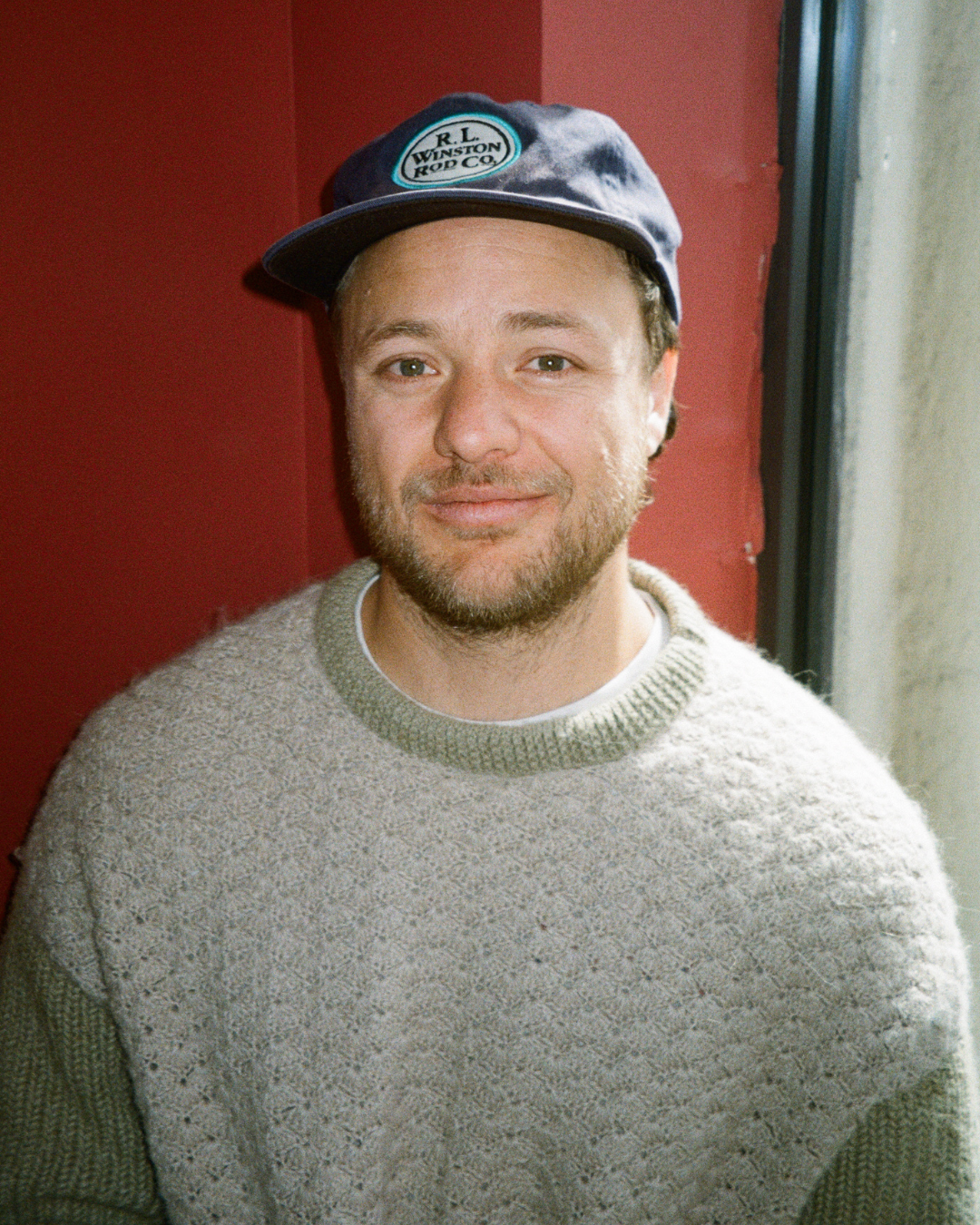
Rebuilding stars Josh O’Connor as Dusty, a stoic cowboy whose ranch is destroyed in a devastating wildfire. Relocated to a trailer community, the film sees Dusty attempt to reassemble his life with the support of his new neighbours who have also lost everything, as well as reconnect with his ex-wife Ruby (Meghann Fahy) and their young daughter Callie-Rose (Lily LaTorre). Set against the beguiling landscape of southern Colorado where he grew up, director Max Walker-Silverman’s sophomore feature is an understated yet powerful story of personal resilience, the increasing uncertainty of the natural world and the power of community in the wake of disaster.
The day after the film’s London premiere at Picturehouse Central, MASSIVE’s social & editorial lead Hannah Stokes caught up with Max at the cinema’s members bar to chat about the film’s personal resonance, the year of Josh O’Connor, and the increasing need for stories about human connection.
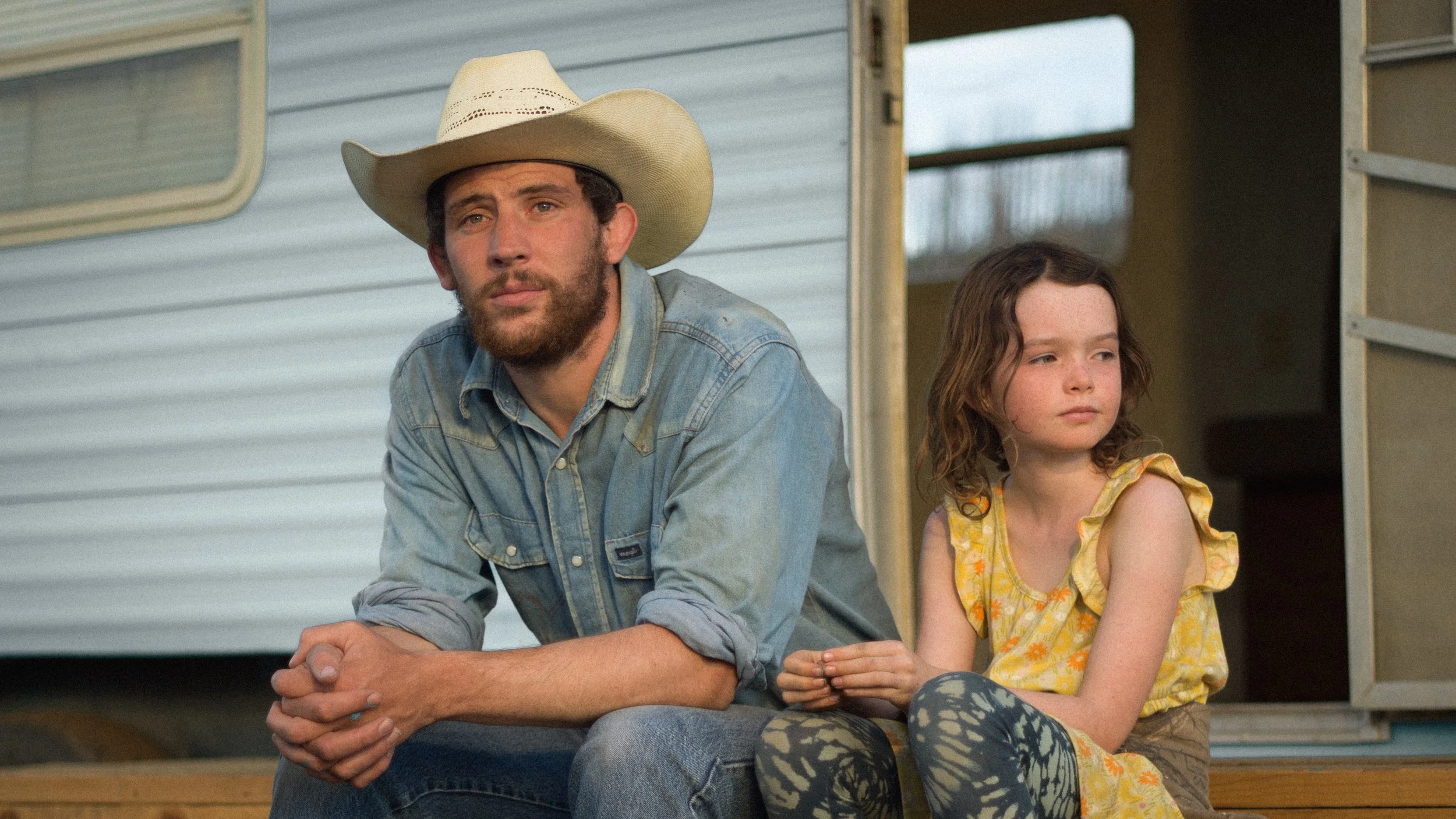
HS: I know this story is based on your own personal experience growing up in Colorado, and a devastating wildfire in 2020 that personally impacted your family. What made you want to tell that story through film? Where did that idea begin and how did it develop?
MWS: That's a very good question. I mean, this is... I guess, the great [laughs] and mysterious purpose of art- to translate the bewildering experiences of real life into something distilled and discernible. And in this case, this story is based on a very real and specific thing, which is a fire that took out my grandmother's house and the beautiful forest around it. But more broadly, just the questions of how to imagine a future in a perilous, warming world. But the film itself takes those very real things and dresses them up in a form of fiction, or a fable. For me, it was an act of imagination, you know? It was not knowing if the future was gonna be okay, but wanting to believe it could be, so I wanted to make something that offered some example of that. Then, the hope with fiction always is that it's something that you can share, and it might mean something to other people elsewhere as well.
HS: Around this time last year, director Joachim Trier declared that ‘Tenderness is the new punk’ at the Cannes premiere of his latest piece of humanist cinema, Sentimental Value. That phrase really rung in my ears as I was watching Rebuilding for the first time; I feel like it’s a sign of the times that in an age of increased social and political division, and also with the prevalence of AI in everything we consume now, we’re craving stories about authentic human experiences and connection. As a director and a writer, do you feel a heightened sense of urgency to tell these stories of connection in an increasingly divided world?
I always loved the experience of gentle stories, and stories that sneak up on you and are kind of lovely. I know the world isn't always so, but why bother to work in fiction if you can't imagine things that are better than they are in the real world? Obviously my country right now is dominated by malice and meanness and selfishness but I just refuse to believe that that's inevitable. I don't know, it's so hard to know if a movie can change things or change anything, but we do the little things that we can. I've been able to make movies about a place that I love, and about people that I love, and I just have so much affection for these characters and their world, and the films are just an expression of that care.
HS: I wanted to talk about the film’s title, because I found it interesting how the meaning of ‘rebuilding’ to Dusty (Josh O’Connor) changes as the film goes on. We see that Dusty’s self-identity is intrinsically tied to being a cowboy or a rancher, and that vocation is intrinsically tied to a place that no longer exists - Dusty’s ranch that burns down at the beginning of the film. So, as the film progresses, we see this rebuilding as less of a physical rebuild of a place, but more as a rebuilding for Dusty of his relationships with his family and his sense of self - by the end of the film he’s not just a lone rancher but a present father and an active neighbour. I was wondering if you could speak about developing that character arc?
MWS: I find legacy to be such a fascinating thing because it's both, kind of glorious and it gives pride and purpose to like the quotidian actions of our lives - in this case it’s a rancher who takes so much meaning from the fact that this is what his parents did and his grandparents did.
HS: It's baked into the land, with his parents and grandparents being buried there and the way the land holds memory.
MWS: Yeah, exactly. It's purpose, and there’s something about us as human beings that needs that. We can live happy and proud lives very simply if there's purpose to it, and that's what this work and this land has given him. And at the same time, there's a weight on his back and an expectation he feels to continue a way of life that won't continue, because the world changes unrelentingly. You know, its inevitable that this ranch is not gonna be able to continue the way it did in through the next generations, whether there's a fire or whether there's not. In the film, the change is forced upon him in a really violent way, but I believe it was coming regardless somehow.
And the title of ‘Rebuilding’ - of course, rebuilding is kind of an impossible thing; you can't go back to the way things were, and in fact, when it's done most boldly and beautiful, it's a reimagining, you know? It's a reinventing. And I'm really curious about that effort to move forward by simultaneously honouring the past and also accepting the future somehow - it’s hard to do. So that became the title, you know? It's a little simple and obvious, but it's a humble film to me, and dressing it up with like a poetic, grand title just felt kind of dishonest [laughs].
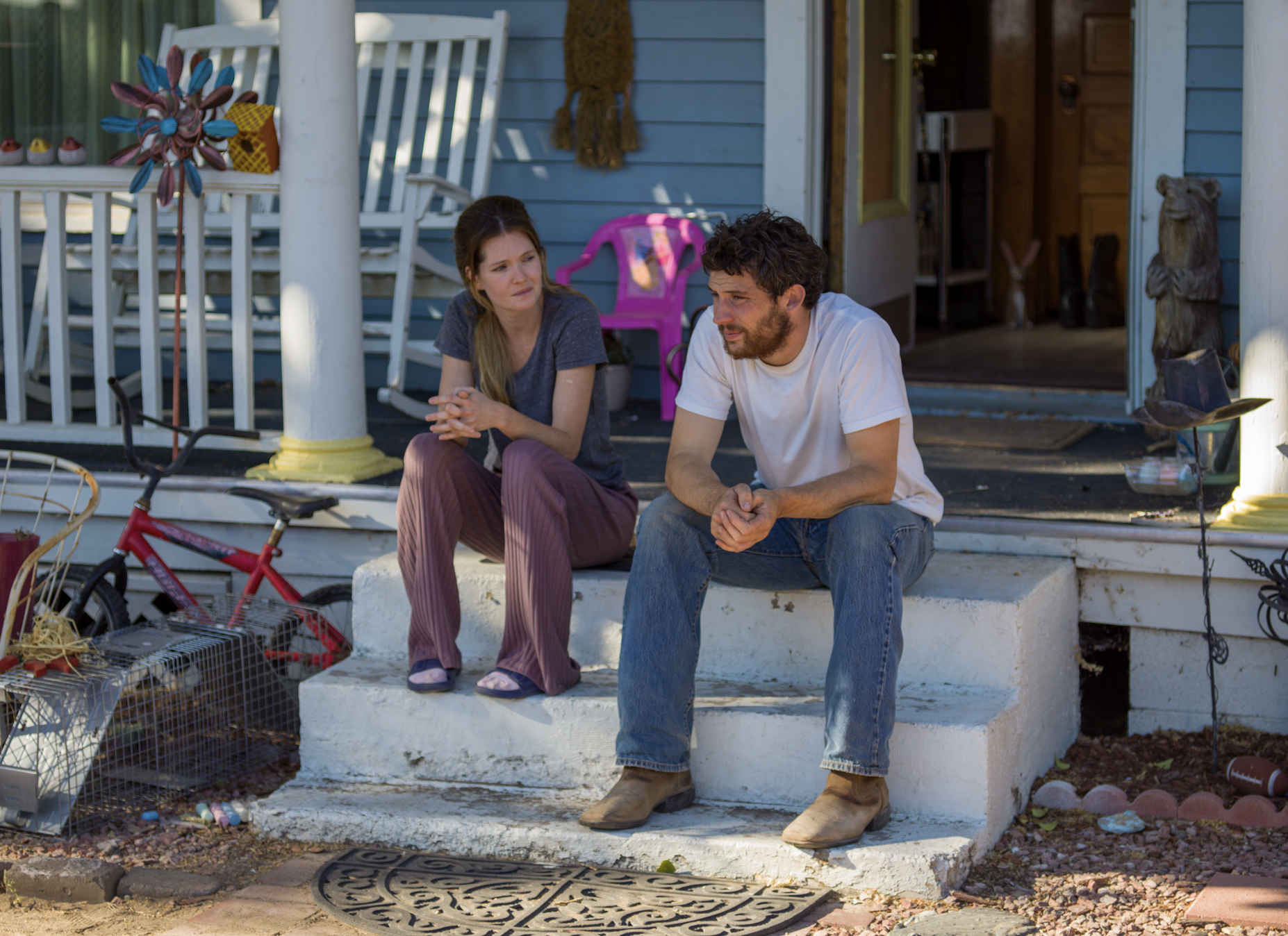
HS: You mentioned the inevitability of change, and I read another interview that you did where you discussed the irony of ‘home’ really being something that is impermanent, and the paradox of finding stability in the inevitability of things changing. I wondered if you could speak to your relationship with the home and the role that it plays in this film.
MWS: I mean, I think my relationship to home is, is entirely based on where and how I grew up. It's funny talking about this stuff in Europe where things are actually like, old. Like I was just visiting my sister in Oxford, and it's like a thousand years old. But, you know, we didn't grow up like that, and the the town I grew up in went from being a summer Ute hunting ground to a mining town to a hippie town to a ski town in a very short period of time. And even the version of it that I grew up in is now completely gone, and it's weird because I love the place, and I also miss the way it was so much. And then I also have hopes for how it could be, you know? And so home becomes this odd balance of the place you remember and the place you want it to be, just this mix of the future and the past, and then of course that leaves the present, like this tiny sliver of time. But, if there's an affection for the past and a hope for the future, I think there has to be a home somewhere in the middle.
HS: Yeah, I think as we see in the film, the concept of home for Dusty becomes less tied to a physical place and more tied to this community who take him in after. Were there people from your own community that you drew on in this film?
MWS: Yeah, in two different ways. One is- I grew up in a messy mix of a family where branches go, you know, people married strangely and had kids strangely, there’s a lot of half siblings and a lot of challenges for a lot of people. But there’s also a lot of love, a lot of unofficial aunts and uncles who may not be related, but really are a part of the village. I'm sure that that might be considered like an unconventional family, but I think it's probably very normal, and I wanted to pay tribute to that, you know? And to divorced parents who weren't defined by their own dramas, and who, despite it not being easy, are going to be good parents nonetheless.
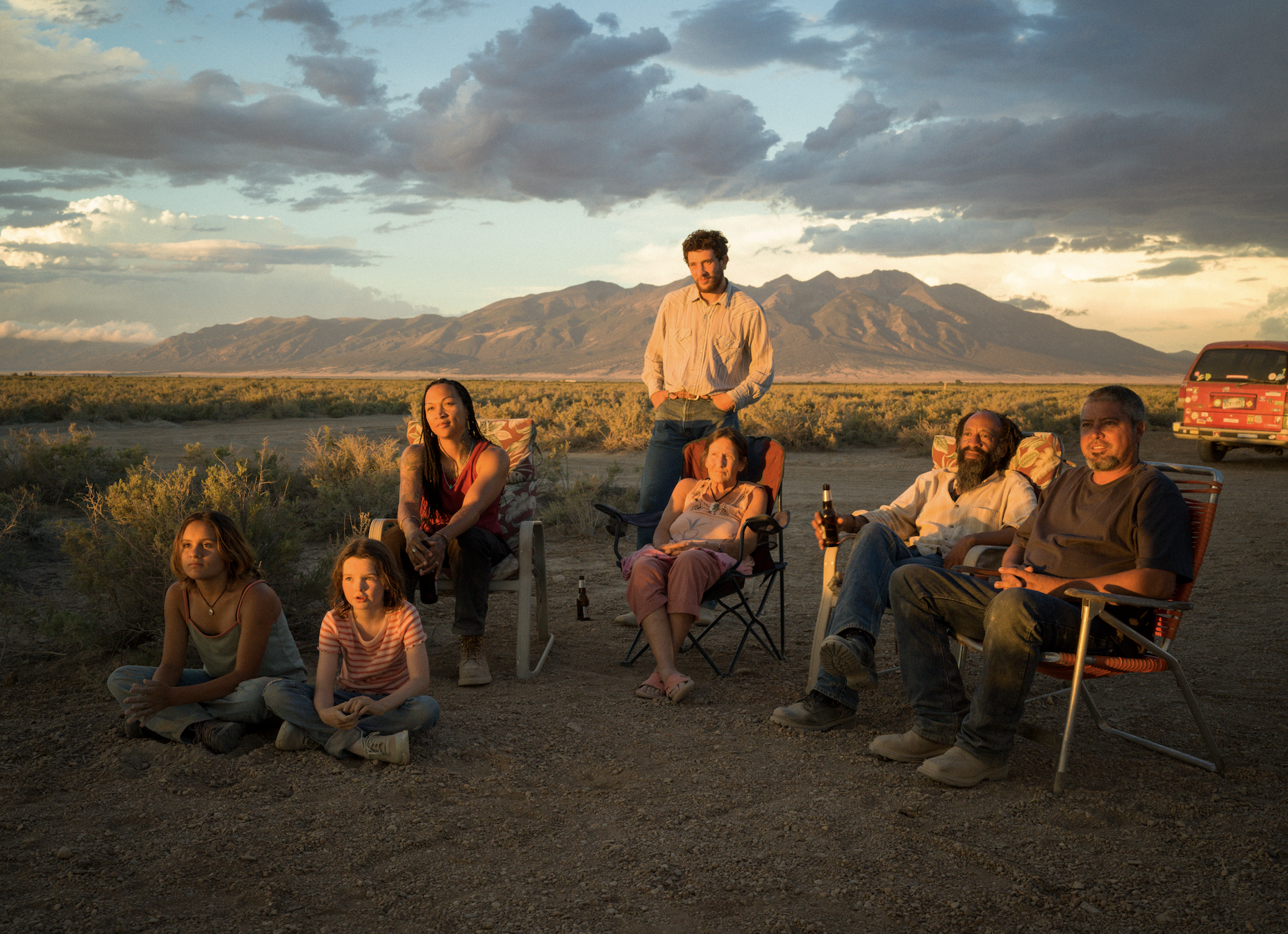
And then the other version of family that I was thinking about in this film is families that are forced together by disaster. And that’s this great paradox, right? That in these worst moments, unrelentingly the best of humanity comes out. It could be after a flood, it could be after an earthquake, it could be after a fire, it can be even be in the wake of war; the worst possible things are also where you find the most generosity and the most kindness. And not just sometimes, but every single time. I chose to draw some hope from the fact that in a world with more and more disaster, there's also going to be more and more care somehow - it never lasts as long as it should or as long as we want it to, but could it last longer? Could it pave a path to a better world? I don't know - I hope so. And that's, again, like, that's the point of a film. It's fiction. There's space for hope - that's what I tried to embody.
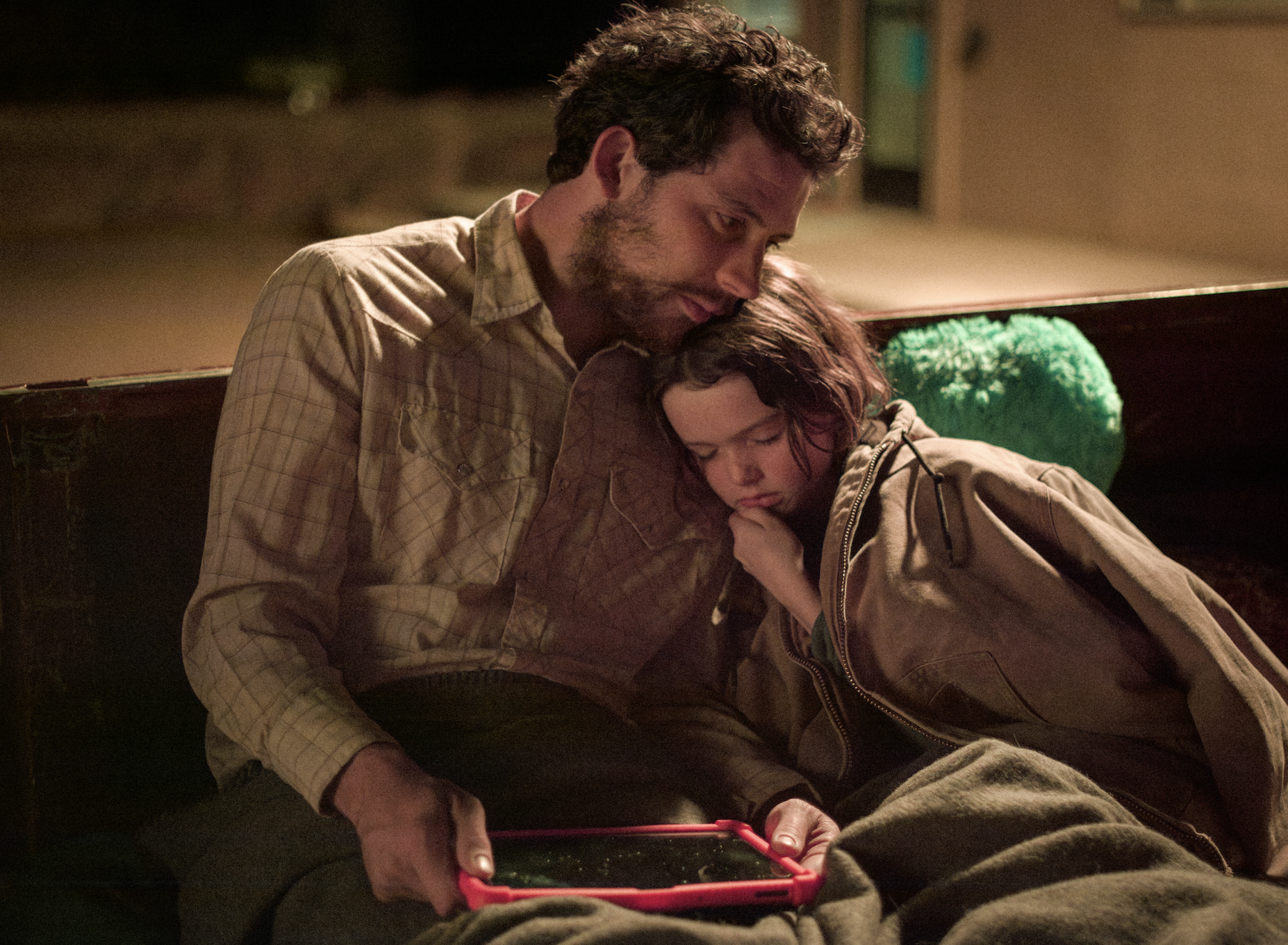
HS: Going back to what you were saying about complicated family dynamics, obviously central to the film is the relationship - or the 'rebuilding’ of the relationship - between Dusty and his young daughter Callie Rose, played by Lily LaTorre. I think Lily is a revelation in this film, and plays the part with this great balance of childlike wonder but also like, a deep knowingness that I think is very authentic to children who have grown up in messy familial situations. How did you cast Lily, and how did you - both in the writing of the film and on set - work to build that believable father-daughter dynamic between her and Josh?
We found Lily, insanely, in a small town in Australia, which was quite surprising. I didn't know watching her audition that she wasn't American, and that she’d never been to United States - I mean, her accent was perfect. She’s a very special talent with a really lovely family, and a really lovely upbringing. She’s a very good, professional actor, and she brought a lot of dedication and preparation to the role like a great actor does. And then Josh O’Connor, Meghann Fahy and Amy Madigan were also great scene partners to her and really generous and patient - I think they were all working together and looking out for each other. There was this really interesting dynamic that sort of happened where the character Callie Rose is - I think - imitating her father's toughness in a way. She’s performing this sort of stoic character, because her father, who she loves and looks up to, has that. And so Lily, of course, was also imitating the grown-up actors around her, and sort of imitating Josh’s work in a really appropriate way, you know? Because that’s what the character was doing as well. But she’s so good, and Josh was so good and really generous whilst working with her, and I’m really appreciative of both of them, of all of them.
HS: Yes I wanted to talk about the casting of Josh O’Connor in this film, because obviously in the UK we’ve been flying the JOC flag for a while now, and it’s really nice to see that’s he’s garnering more and more international acclaim. I know Rebuilding was shot in 2023, which was the year before Luca Guadagnino’s Challengers came out and kind of skyrocketed his career.
MWS: Yeah. Ironically, part of the appeal was we didn't think people would know who he was [laughs].
HS: It’s kind of funny now, with this being the fourth film that he stars in that’s come out in the past year. Apart from his [laughs] ‘unknownness’, was there something particular about Josh that made you want to cast him in this film?
MWS: There were three things. One is, as I got to know him, and as everyone who gets to know him will tell you is like - Man, that is a nice guy! That is a sweet and charming and caring person, and in addition to that just being a pleasant thing to have around, it’s a critical centre of an independent film as well. The conditions are challenging, and the work is not easy, and if you don’t have a very sweet beating heart at the centre of it, it just sucks, and it may in fact be impossible.
The next thing I would say is like - acting is a very technical skill, and he’s just very good. More specifically, I think he’s very interested in characters for whom masculinity is a challenge, and I was really drawn to and admiring of that. I've experienced that. I've known lots of people for whom the expectations of that role are kind of tough and unfair - they don't know how to say what they want to say, and don't think they should say it necessarily. So I think the skill to tell a story underneath the weight of that sort of masculinity is a hard thing to do.
And then it's just soul. Like I don’t know what else you’d call it. It's that thing in someone's eyes that makes you want to be with them and stay with them and experience a story with them. Soul and skill are not the same thing, but every now and then, in one person, they’re blended together. That makes for a very special performer, and that’s what Josh is.
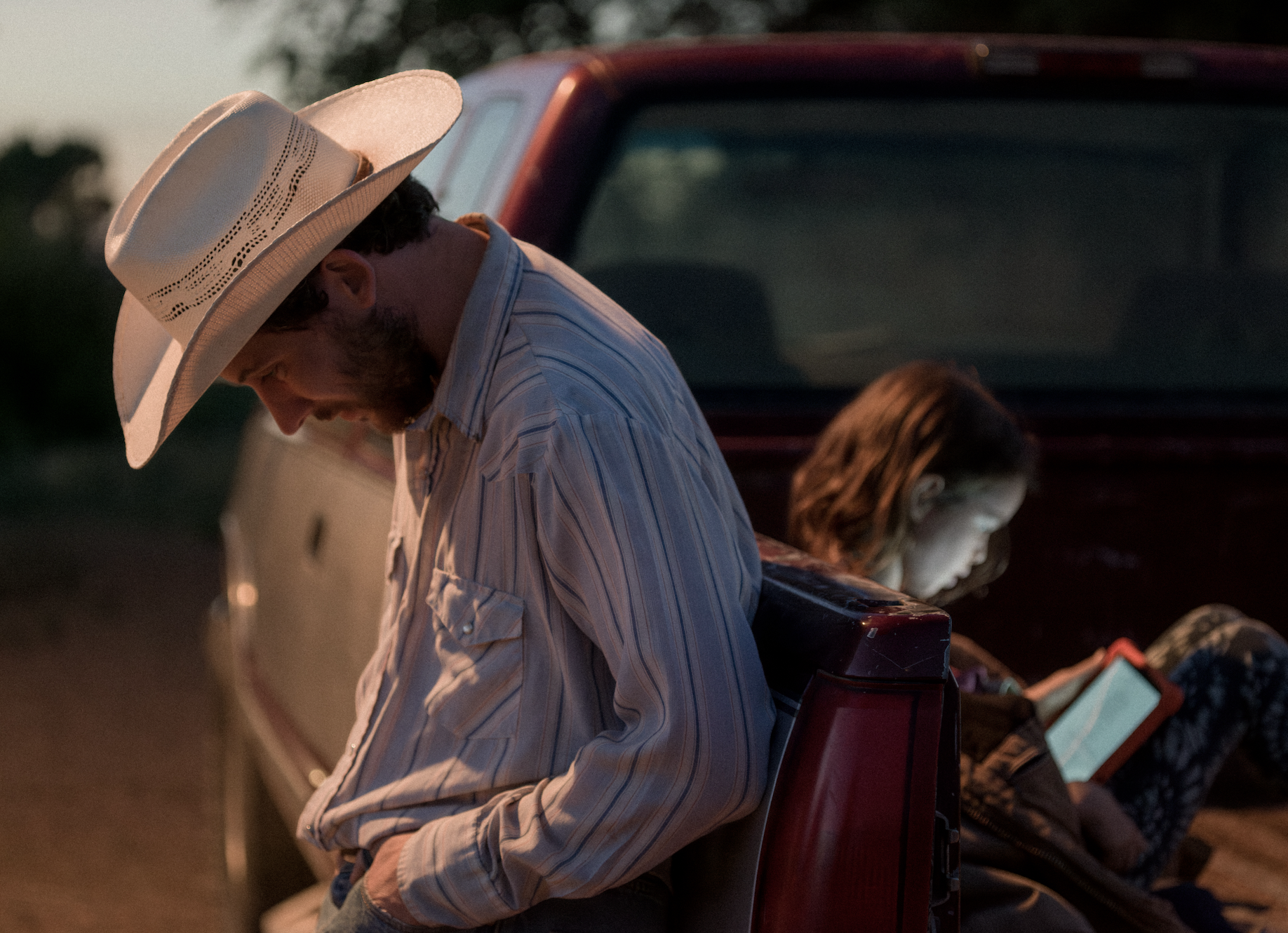
HS: I was interested when you were talking about masculinity in crisis, because I think that is so tied up with the myth of the American cowboy which Rebuilding also explores. It was interesting thinking about this whilst watching the film as someone from the UK, because although Britain has its own masculinity crisis which I think is tied to - amongst other things - our concept of the British stiff upper lip, the cowboy myth is something that is very specific to the U.S. Growing up as a young man in Colorado, what is your relationship to that myth?
MWS: It's a really interesting question, especially working in film, because Hollywood kind of invented the cowboy in a way. But then of course, it becomes this cycle where it's like who is imitating who, you know? Is Hollywood imitating these ranch rodeo cowboys or are cowboys imitating Hollywood? It’s a feedback loop, and that’s culture. I don't know, to me it's funny- to be perfectly honest, it's just a story about a farmer, like the sorts of people I've known growing up. But of course, you have a cowboy hat on a character and it’s suddenly perceived through the lens of this very long and storied genre, and there’s an opportunity in that to play with the expectations that people might have. Obviously, I don’t think it’s radical to say that the cult of the tough, individualised dude is flawed. It clearly is, and dramatically so, but it persists relentlessly and it takes a lot of bravery for a dude to be open and vulnerable, and accept help. Rebuilding is the story of a character who has to learn that accepting help and giving help are one and the same thing, you know? You can’t do one and not the other. I don’t know, it’s easy to say and hard to do.
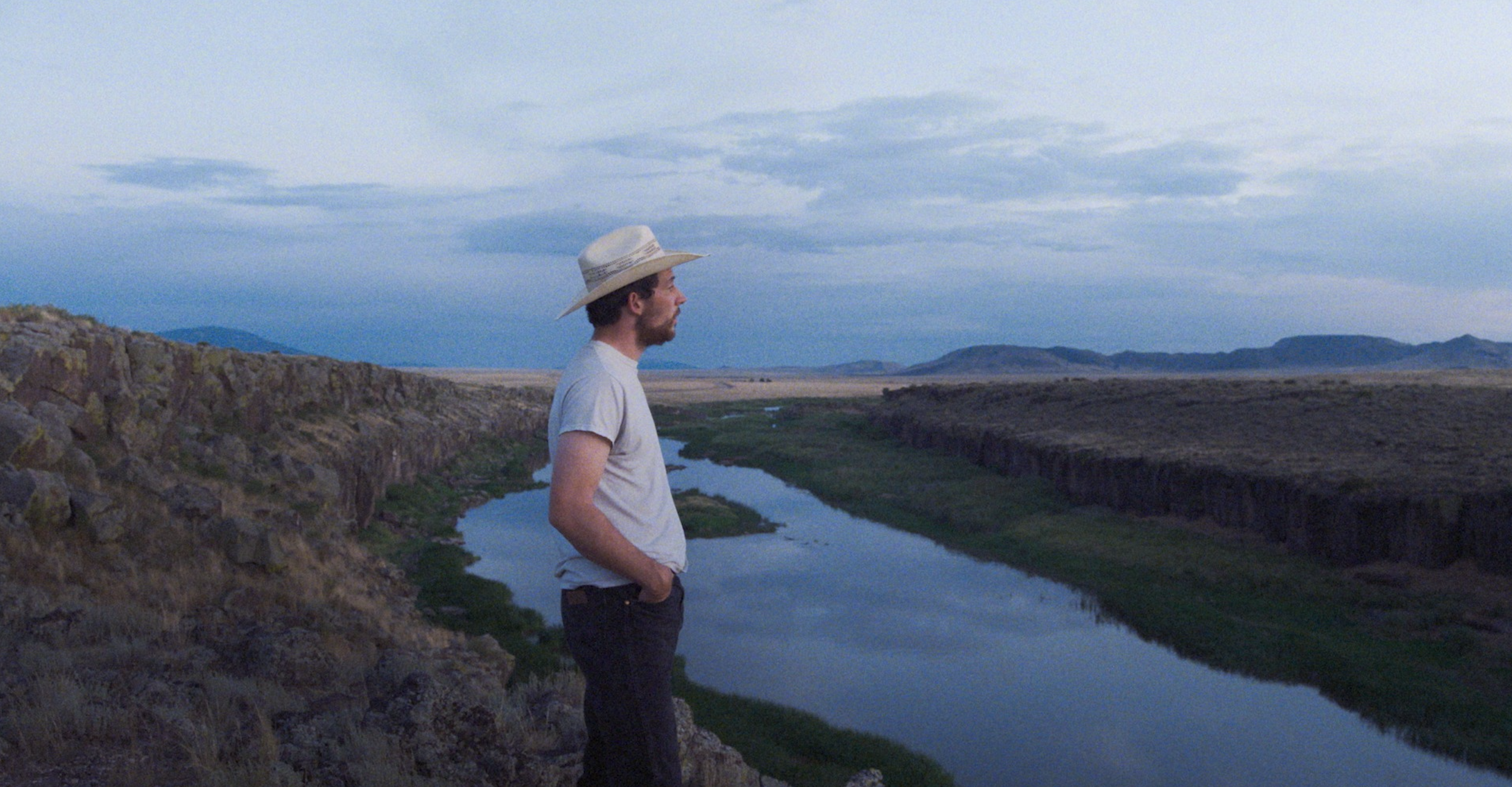
HS: You’ve cited director Alice Rohrwacher as one of your heroes, and when I was watching Rebuilding, I was thinking a lot about her film La Chimera, and not just because Josh O’Connor also stars in it. As filmmakers, I think that the way you present landscapes is quite similar - whilst they’re beautiful, they’re never these super idyllic or romanticised expanses. I wondered if you could speak on your relationship to these landscapes and how they're portrayed in your work. When you're writing, do you approach nature as its own character?
I mean, I don’t write a list of the characters and put nature as one of them, but it defines everything, you know? Nature's defined my whole life; I step out my door, and I see the forest that was protected, and the forest was logged. Certainly growing up in what’s considered a beautiful place, and in the mountains, it's like a living log of human choices, and the fights that were won and the fights that were lost. It's never this perfect natural thing, and for the characters in the film, their lives are based on the land around them, and their relationship to it - the pride in caring for it, and the things they miss in it. I hope it's really present in the film because it's really present in the lives of the people whom the film is about.
Something I really admire in Alice’s work, and its kind of what you were saying, is the nature of the land - like the world is so rich and beautiful, but it’s not unspoiled. It’s also industrial, it can be muddy, it can be dusty, it can be worked. There can be factories, but it’s so beautiful and it’s so rich, and it somehow feels very real whilst still feeling very romantic. That’s why she’s the best, you know? It’s incredible what she can do. I have long ways to go to get there, but yeah she's really something.
HS: Yeah I'm really captivated by her work, and like you were talking about there’s this interesting interplay between these traditional rural landscapes and modern consumerist society, which I also think you see in Rebuilding with the effect climate change has on these landscapes. I wanted to talk to you about that because I’m 27, so I'm not that much younger than you, and I think that we've kind of grown up in a world that's like - I don't know about you - but I've never not felt climate anxiety. As an artist where do you see your place in what’s happening in the world right now, how do you use your work to make sense of it?
MWS: I mean, I also don't remember living without climate anxiety, and I think it goes back to - it's like ironically these probably largely well-intended efforts when we were kids of like, only you can change the world. Being told it’s your responsibility to turn off the light and turn off tap, and there’s a version of that that’s true, right? We all have a role to play, but also like ExxonMobil and Dick Cheney were very happy for you and me as little kids to feel like it was our responsibility, and by implication kind of our fault. And it wasn't, you know? The effort in some of that may have been trying to protect the world, but I think we all also knew that it was failing. And we’ve watched it fail, and we’ve seen climate change perceived and treated as this thing on the horizon that’s coming unless we stop it. But that’s not what happened - we didn’t stop it, and it is here, and it is around us, and will continue to be. And yet therein lies the perverse hope because here we are. The sun is shining. That’s confusing, right?
And so the role of film, the role of art- you know I still believe that in many ways probably the role of science is more important. Like we can make a change in the way we live and the way we use energy that can actually exist for a long time. The role of politics probably remains more important, the role of journalism probably remains more important to tie us to the realities of the present moment. But there is still a role in art because that’s the only thing that can really touch on some version of a future that doesn’t exist. And to me that’s a very real thing, because anyone who’s ever changed things for the better did so because they believed a better world was possible. Very simply, you can’t fight without hope. I felt very hopeless growing up, and perhaps you did too on this front, and it’s no good to feel that way. You have to believe that things not just could be good and beautiful, but will be, and that we’re winning, and I still think it’s possible somehow. So that’s the art, you know? Can we imagine this thing? Can we have some version of it, however modestly, to move towards together?
HS: On that note, what do you hope audiences take away from this film?
MWS: I hope people feel some affection for things that are gone maybe, and those things are with them still. I hope people feel some kind of hope for a future, but then I suppose again what that distills down to is the present, and I hope that the world outside the movie theatre looks just a little prettier, you know? Or if you get a call from your mom, it feels a little more meaningful. That’s really at the end of the day what I hope.
Rebuilding is in cinemas now. You can find your nearest showtimes here.