
‘BLUE HERON’ DIRECTOR SOPHY ROMVARI ON HER STARTLING DEBUT
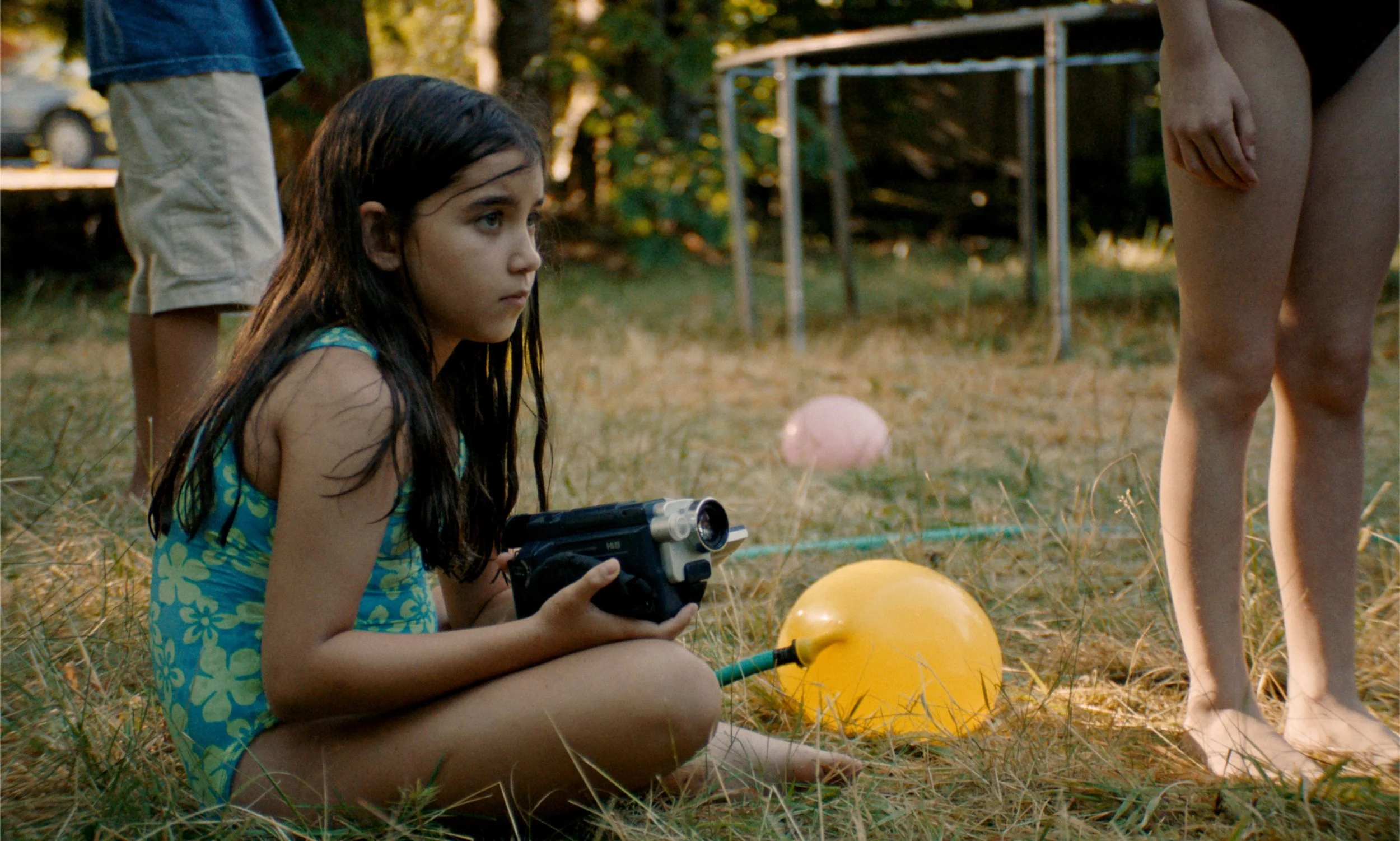
As formally inventive as it is quietly heartbreaking, Canadian director Sophy Romvari’s startling debut Blue Heron has been making waves since it first premiered at the Locarno Film Festival in August of last year. A semi-autobiographical story of childhood in crisis, the film’s enduring praise from critics as well as deep resonance amongst viewers has solidified it as one of this year’s most talked about indies.
After an impressively long cinema run stateside, Blue Heron has finally flown across the pond to UK and Irish Cinemas. On the last leg of her almost year long press tour, MASSIVE’s social and editorial lead Hannah Stokes caught up with Sophy on her arrival to London, to chat about the experience of making and releasing her first feature film, navigating her own personal relationship to the film’s subject matter, and trying to pursue authenticity whilst working in an inherently contrived mode of art-making.
HS: It’s been almost a year since Blue Heron first premiered at Locarno, and since then you’ve been touring the film across the US and Canada, and now internationally since the film is out in the UK. How has that been for you?
SR: I mean there hasn't been much time to think about how it feels. It’s been a very all-consuming experience, but I think also a little bit addicting, to be honest. Like wanting to give it as much as I possibly can, because you get to a certain point where you've done however many interviews and Q&As, and then more are added, and I never even considered saying no. [laughs] Because I just was like, "Well, I wanna give this film everything I can and put as much as I can into the release," so I really committed to it. But of course it has physical and mental repercussions. But it also feels like a once in a lifetime experience. I'm really trying to dig deep and just carry on with as much energy and enthusiasm as I can, even though I am intermittently physically falling apart. [laughs] It truly is such a pleasure, even though I'm tired, so I'm trying to balance the two.
HS: Where did this film start for you? You’ve made a lot of short films that explore similar themes to Blue Heron, was there a conscious decision to be like, "I want to make a feature now", or did it evolve naturally?
SR: I had finished my master's, which was where I did Still Processing, and there was never a point in which I thought, "now is the time for a feature", it was more that I had started to develop this idea which felt like it was a feature. Because I didn't want to make a feature just for the sake of it, so I spent so long making shorts because I wasn't ready to make a feature, I think. But I knew that this film was going to explore a large period of time, you know, from past into the present. And so there was no way I could explore that in a short film. So it felt appropriate to then finally develop it into something that was feature length and because I knew it was going to have this passage of time, even though I didn't know everything at that point, I knew that it was rich enough to draw out into that format.
HS: I wanted to ask you about autobiography, because you've described the film as “emotionally autobiographical”, with Sasha in this film being a stand-in for you in many ways. But you've also said that you find the term autobiographical limiting. I wondered if you could speak on that, about how you negotiate that label whilst making a film that is personal to you.
SR: Yeah, I think it's all about perception, because of course the film is personal - it actually probably couldn't even really be much more personal, but, at the same time, there are many things in the film that didn't happen or happened very differently. Or, you know, there's creative decisions that were made that were completely for the purpose of the narrative. And and so there's a lot of work that goes into creating a film that's actually accessible to an audience whilst also being personal. And I find that if an audience takes this as, this is exactly how my life went, it feels very... there's no way. It's an hour and a half, you know? There's no way that I could have depicted that.
It's a movie version of some version of the experiences I've had. But it's hard to navigate because I also want to be honest. This is very personal. This is my life. But at the same time, it's just interesting when people take it at face value as like, "Oh, do you still have the keychain that your brother gave you?" And I'm like, that's not a real thing, that's a narrative device that was written into the film. So it, it starts to become quite blurry. And so as a filmmaker, when you make personal work, you have to accept that possibility, that when you make personal work, it is going to be taken as virtually a documentary, even though it is completely fictional.
HS: You’ve talked before about your interest in the way film can be used therapeutically to process grief and trauma, and have mentioned wanting to teach on the subject. What first drew you to this concept, and was there a particular sense of catharsis you got from making Blue Heron?
I think that was a theory or that was the kernel behind Still Processing because I was in my master's. And so I was actually studying that as a concept very academically, and I was looking into a lot of work previous to mine, autobiographical, personal work that's oftentimes by women and dates back to, like, the '50s and '60s. As a tool, there is a lot of benefit to making a film about difficult experiences, and I think the therapy is basically that it confronts the reality, and you're forced to accept that reality. And I think that that is the benefit, but I don't think it's cathartic in the way that you might assume. It's more that you're actually just having to confront, like film and moving images is a confrontation in and of itself. And I feel like with Blue Heron, I came to the realisation of the limitation of that as well, because there's only so much that you can do with images, and you can't recreate, you know, a person. And part of the process of making this film was realising the limitations of what you're able to do because it's kind of futile, but at the same time, you have to confront the fact that you can't control these elements, and that's the therapeutic element, I think.
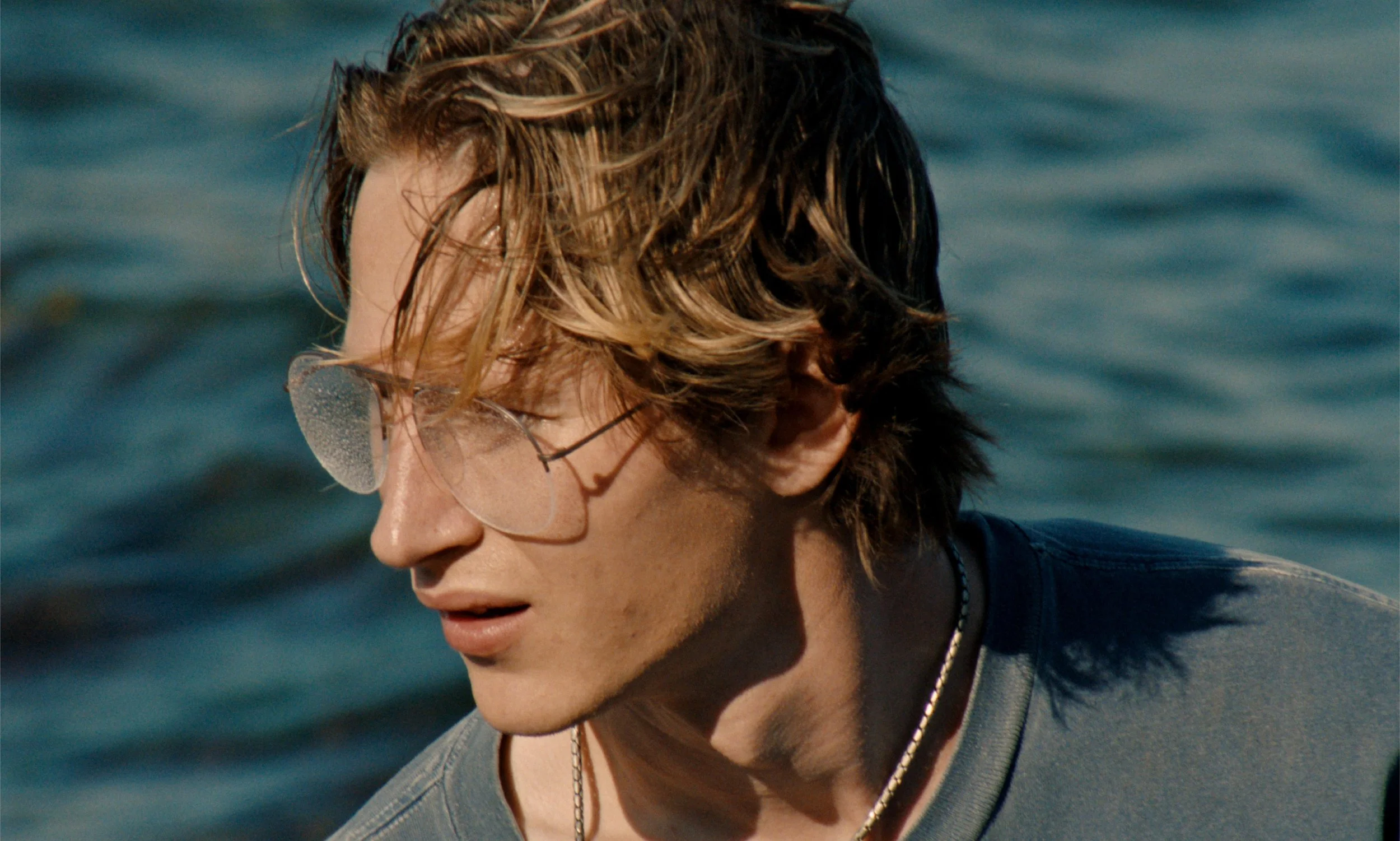
HS: Even though the film is fictional, you do utilise a lot of tools and formal elements from documentary making. What interests you about documentary, and as a filmmaker, how do you conceptualise the relationship between documentary and fiction?
SR: Yeah I don't really think of documentary and fiction as all that different. I find that they're just different approaches to getting a certain outcome. So with documentary, there's just more of a sense of a contract with the audience that what you're seeing is real, but I think it's just as contrived as fiction is. And I find that you can use the approach to how people make documentaries, and the outcome of that can be something that feels more authentic. So for me, it's always about the perception of authenticity.
And so with the social workers in the film - they’re all real social workers, and I wanted them to represent themselves accurately, but it's a completely contrived situation. So it's absolutely not a documentary. I didn't go into a social work office and film them - it was a setting in my film school's staff room, and all the social workers had no connection to one another - it was a contrived scenario. So it's like if someone made this and said it was a documentary, it would be quite unethical actually, because it's so contrived.
But at the same time, it has a more realistic resonance because of the way that we filmed it. So I just feel like I'm taking tools from both of the approaches of filmmaking and then trying to get the most realistic representation from that.
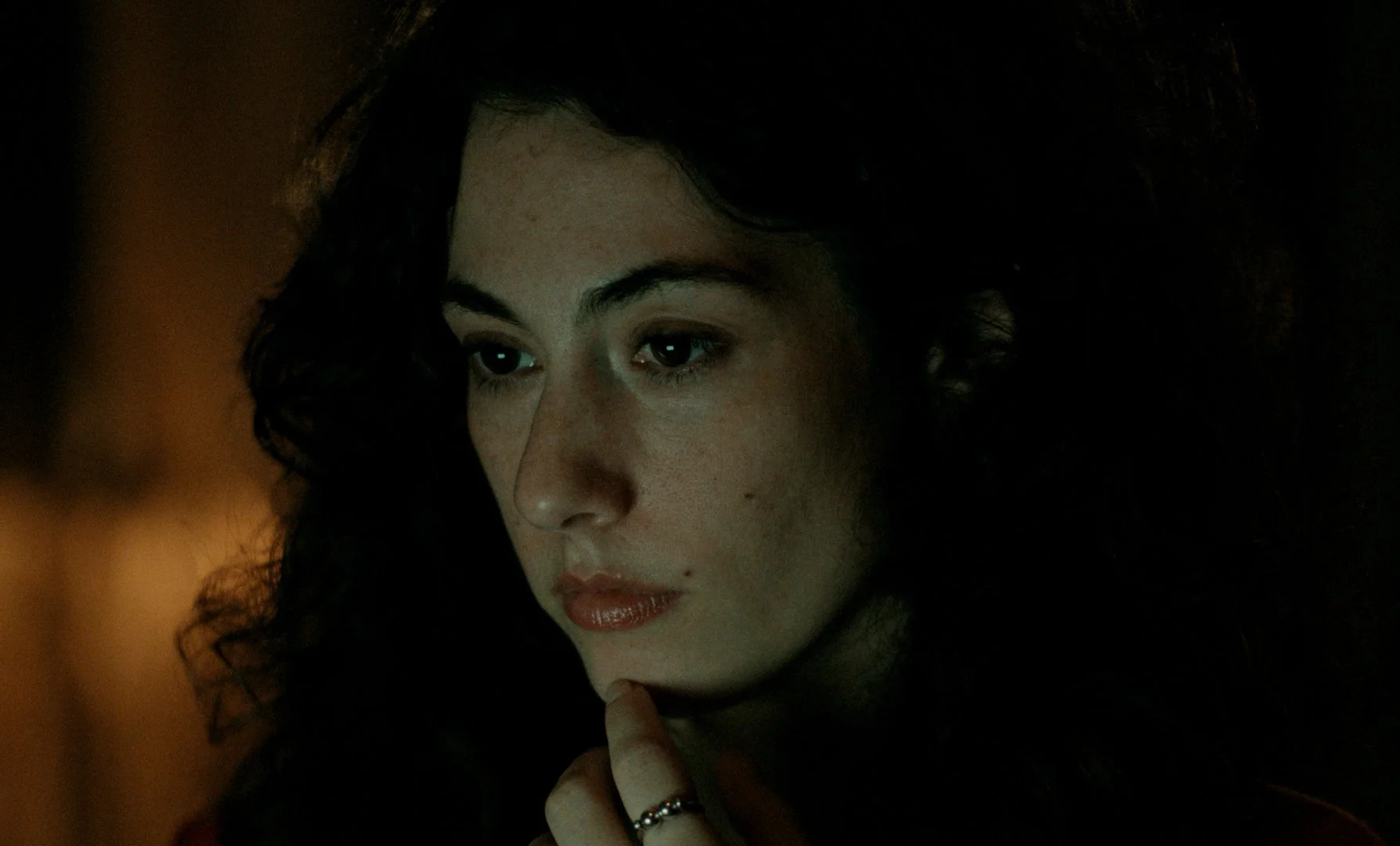
HS: Yeah, I think that realism really permeates the whole film, and what particularly struck me was the naturalism of Amy Zimmer’s performance, who plays adult Sasha. What was the casting process like for a role that was very personal to you, and how did you and Amy work together to develop the performance that we see on screen?
SR: Yeah it was very collaborative actually because Amy doesn't come from a dramatic background, but she had a lot of connection to the character. And so together we developed sort of the background of this character, which kind of was pulled from both of our lives in many ways. A lot of the work that we did before shooting was - I gave her movies to watch, and we discussed sort of the tone of the performance that we wanted and that her character was, for the most part, going to be observational, similar to how young Sasha is. But then she does have a bigger responsibility as the adult character, at the end of the film, to deliver this acknowledgement of everything that we've just been witnessing. So yeah, it was very collaborative, but also, it felt like she was really tapping into a certain empathy for herself, for me, and for the character. So it was a really difficult feat, but I think she's a phenomenal dramatic performer, and I can't wait to see her in more films.
HS: Yeah I think she’s brilliant. One of the film, one of the scenes that really stood out to me is when she meets younger Sasha. How was it filming that?
SR: Yeah, I mean maybe from the outside it would seem that that would be quite emotional for me, but I don't think of Sasha as me. I wasn't watching that thinking like, I'm healing my inner child or something, I was thinking of it as a very moving performance between this character and herself, and I was moved by the performance because Amy was able to tap into such an emotional place, and it was just quite profound to watch happen, because I think Amy surprised herself in that moment.
But I think when you're making a film, it's too technical and too creative to be constantly tapping into how it affects you personally. Like, it’s so far beyond where you're at by the time you get on set. Even when I watch the film now, like I see it for the technical achievement - I find it emotional, but not because I'm so attached to how it affects me personally in my personal life, but because I'm very proud of the technical achievement. I know that sounds a bit cold, but it's really just how it feels.
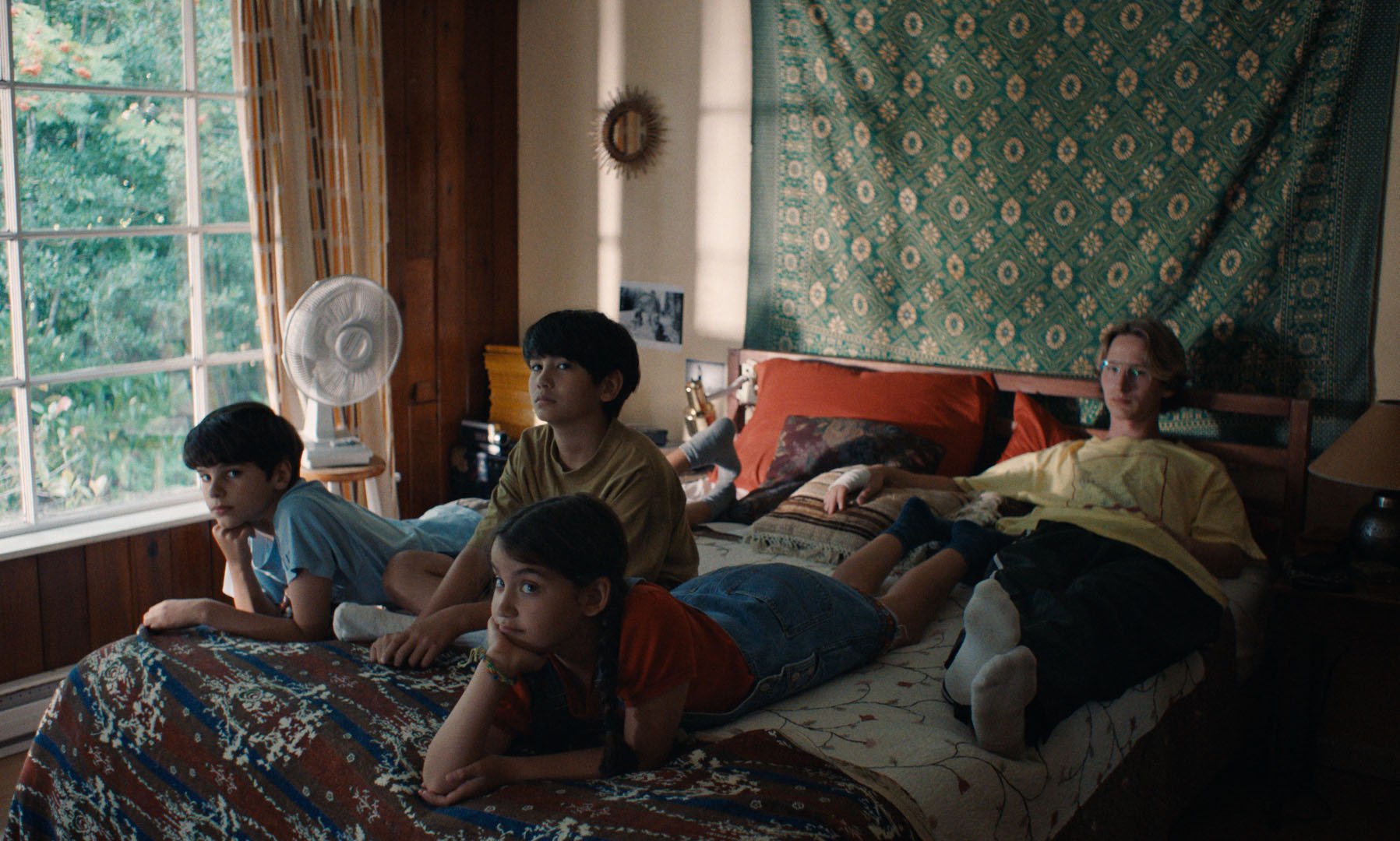
HS: There’s a large narrative jump half way through the film, which is quite jarring, but I think the abruptness of it is really effective. Not to spoil the film too much, but the way that you do end up weaving together the different timelines of the film is very unique and affecting, but you never cross-cut in the conventional sense. Could you talk me through the decision to kind of split that film into halves like this, rather than having a more conventional narrative set up where it flashes back between past and present?
SR: I mean, that was the main thing that excited me about the film. I love bifurcation and to hit, like, a refresh button in the middle of a film. I think it's such an interesting way to use the form because it's to recontextualise what you've just seen, to play with the expectation of the audience. And I think that this film never could have worked- I think if it was a narrative film through to the end of just the '90s period, I wouldn't be interested in making that version of the film.
I think cross-cutting is a way to soften the experience of what this character is going through and I want it to be harsh. I wanted it to be jarring. I've seen many films that do that, where they cross-cut, and honestly, it doesn't feel real to the experience of coming into this period of your life that you're not, you're not getting to, like, juxtapose these things in your life. You're at a different stage of life, and you're not going back and forth.
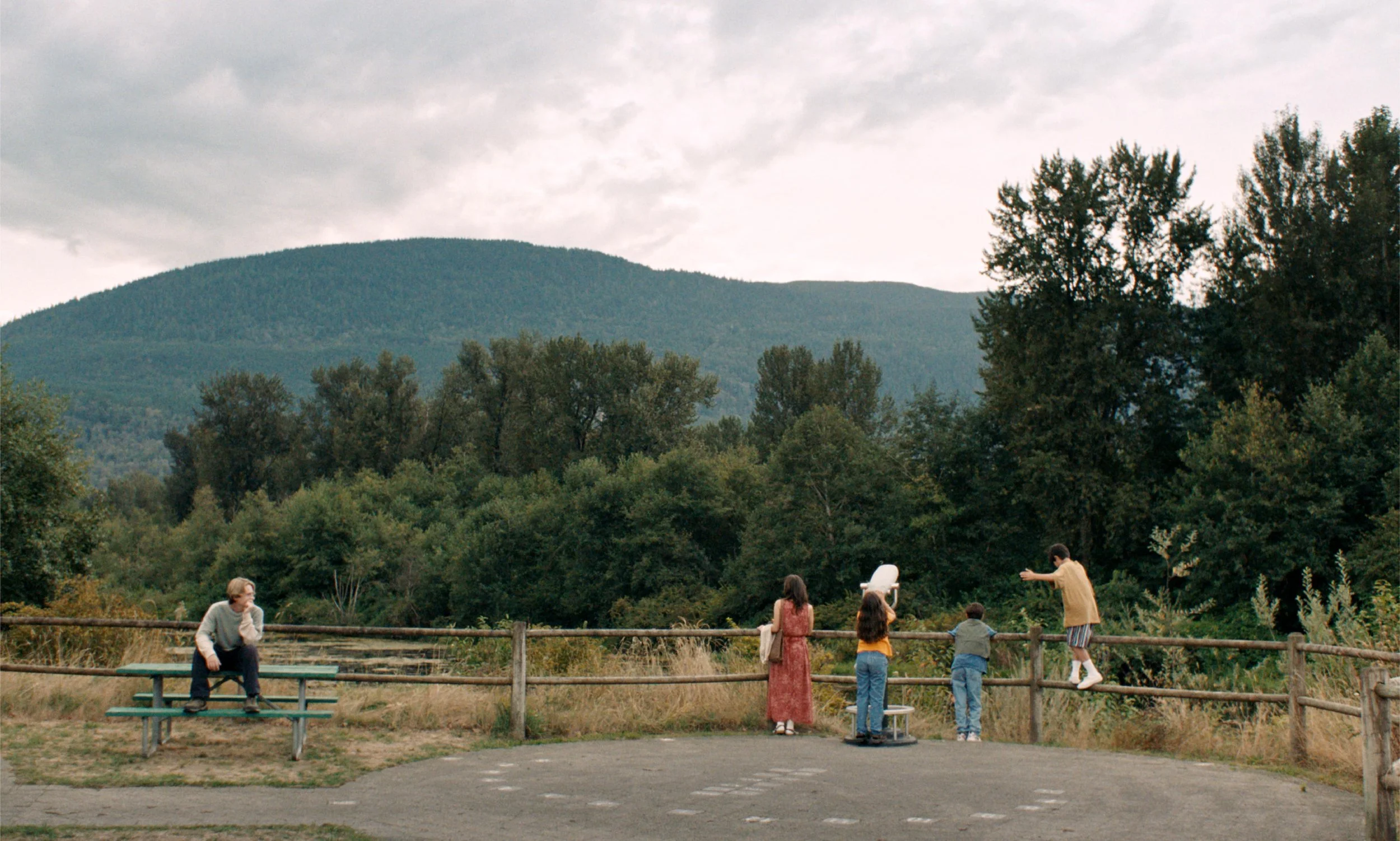
And so, for me the film is not really about her memories. It's about her recreating these things and trying to access them from a different perspective. So I think if it was just a memory film and she was just flashing back to the memories, it would be a different film, but it opens with her filming at the top of this mountain. And in my perception, this film is the film that she makes, and of course, it has memories as part of that, but it's not, watching a character reflecting and remembering as it often is in films. You know, you'll see them thinking, and then you'll cut back to the memory, and that often works great, but I wanted to try something different.
HS: I wanted to talk to you about that opening shot, with Sasha filming on an iPhone. I feel like amongst a lot of filmmakers there’s almost an allergy towards using phones in their work, and part of the reason I love filmmakers like Park Chan-wook for example is the way that he's able to use phones and modern technology, and weave them into the narrative really seamlessly and effectively. I felt the same way watching this, and you’ve utilised a lot of modern technology and digital modes of communication (like Skype) in your shorts as well. What was the choice to both open and end the film on an iPhone?
SR: Yeah, I think that I understand why a lot of directors avoid it because of course it can be very flattening to a narrative because the device is very insular. Like to use a phone is- when you see people walking down the street on their phone, it's inherently very isolating from a communal experience. But I also think it's important to acknowledge that this is the contemporary world that we live in, and it's the way that we communicate, and it's such a formative form of communication for me as a millennial, and it's like- I'm on my phone all the time. I'm on my computer all the time. And so it would feel very strange to me to not include those things and to try to pretend that I'm living this, like, whimsical life in which I'm just writing poetry in a notebook and walking around. [laughs]
It's just not true. and I think a lot of films try to lean into, like, this ephemeral kind of nostalgia even though we're living in a contemporary world, and I just feel like because my films are about confrontation of difficult things, part of it is the nature of the detachment that we experience through the digital world, but also connection. So it just feels very natural to me.
I also really like the way that it's a very effective tool for communicating what someone is going through without having to have a huge amount of set-up. Like it's actually a great thing for low-budget filmmaking, because you can communicate a lot through the inference of what someone's experiencing on a phone because we're so attached to that as an understanding of how people communicate. So when you see her on Skype or Zoom or whatever, you know what that feels like.
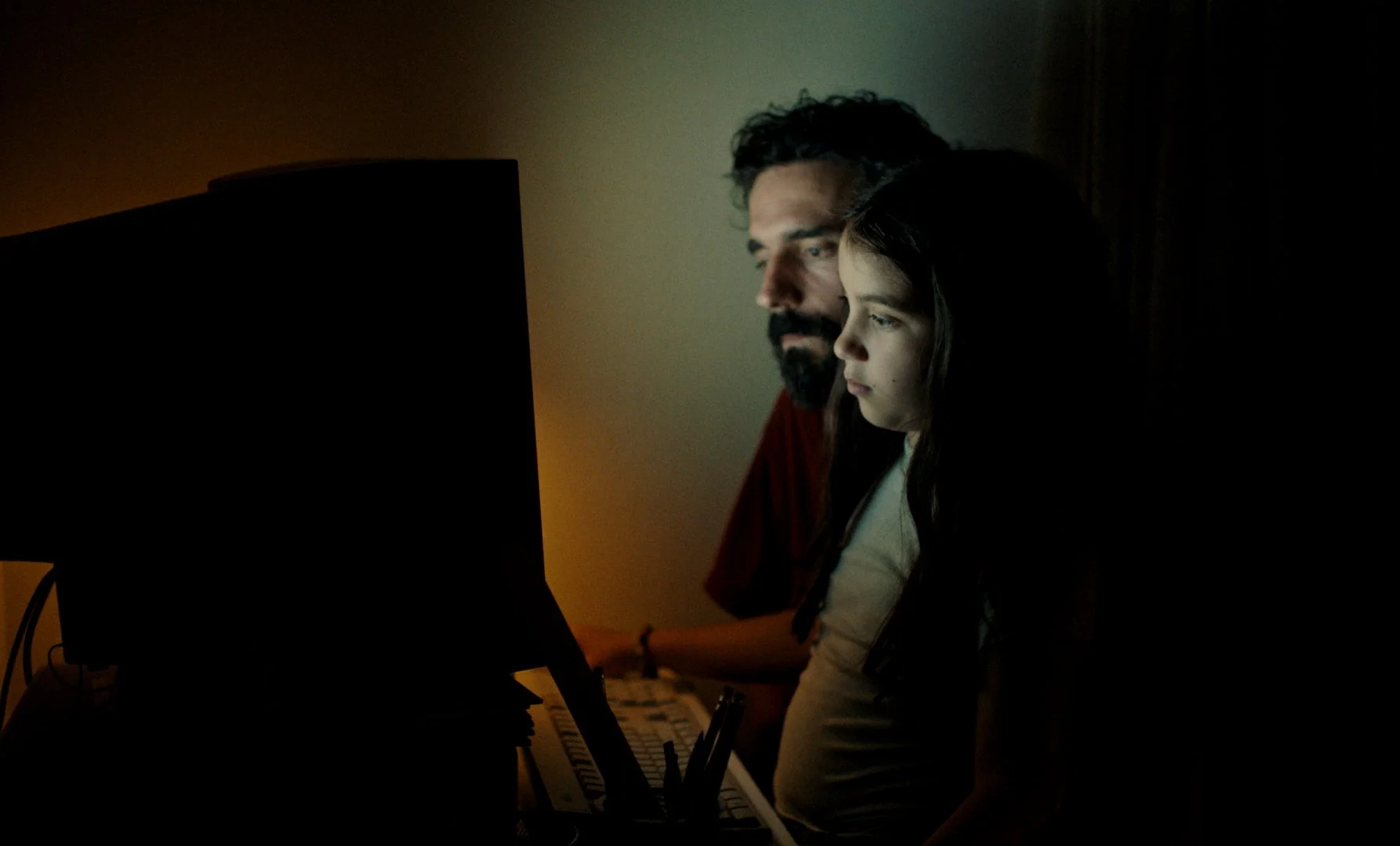
HS: Another of my favourite shots is in the second half of the film, when you're watching Sasha leave in the car. Because it’s shot through an upstairs window at a distance, it does feel quite voyeuristic, and then it pans up, and it does this long zoom to a boat sailing in the very back of the shot, then it cuts to her in the boat. You utilise a lot of this kind of set-up throughout the film, shooting the film like a home movie by using long lenses and then relying exclusively zooms for close ups. How did you work with your cinematographer Maja Bankovic to decide on this look for the film?
SR: Thank you. I love that shot. I hadn't thought about it for a while. [laughs] I remember being very excited by it because there were a few moments that were just really inspired by the situation that we were in, and we noticed that there was a boat that was crossing across the channel, that we could see from the view. And so we waited until it got into the view of where we could zoom and follow the shot. So we were on set, and we were losing time, and we were just waiting for this giant boat move so we could get that shot accurately in place.
So that was not a shot that we had planned previous, but then I was always trying to find ways that we could cut between the end of a master shot into the next shot, and this is very much inspired by [Robert] Altman, and especially Short Cuts [dir. by Robert Altman,1993]. So it was truly seeing what the environment is giving you and then trying to take those gifts, and the zoom allows you to do that a lot. The zoom was a very fun challenge, all the time. We were always trying to find different ways to have a shot be conceptual, but also emotional and also evocative without cutting. And so it became like a fun challenge for us. We were definitely inspired by Altman and [John] Cassavetes as the cinematic references, but then my dad's own home video footage was very similarly shot. He would often shoot from a distance, and I think that because we are trying to show a character who has inaccessibility to this information about her brother, it made sense to me that it would be from a distance but also have the intimacy. So I think the zoom really captures that, and of course, just aesthetically, I find it really beautiful. So the reasons were both practical and aesthetic.
HS: Speaking more on aesthetics, you shoot a lot through through windows or in reflections of windows or in reflections of mirrors, and there's lots of shots where it's like mirror on mirror on mirror on mirror, especially in the section of the film set in the present day. Is there a particular reason why you're drawn to this type of motif?
SR: I think, again, it's just I'm always trying to find visually effective moments that communicate a lot with little. There's not much coverage in the film - when we actually laid out how many shots there were in the film, it's a very low number for the the runtime, it’s not a high cut ratio. And I think because it is also trying to represent memory in a certain sense, the idea of cutting and coverage felt antithetical to that to me, because if you're trying to root an audience in this sense of realism, I think cutting is already bringing attention to the fact that what you're seeing is not real. So we were always trying to keep the camera rolling as much as possible without it ever feeling like it was stretched out for the sake of an artificial sense of pacing.
Oftentimes, it was just that I felt drawn to it because it's a very simple metaphor in many cases. The shot that I felt the most strongly about was the 360 shot that ends in the mirror with the parents fractured into two. And that was something that we wanted to, once again, quickly communicate that there's a before and an after of this information, before the shot they're together and then after the shot they're completely shattered and broken in half. And so just visually I can communicate that without the characters say much, or express much, but visually you're able to understand emotionally what's happening.
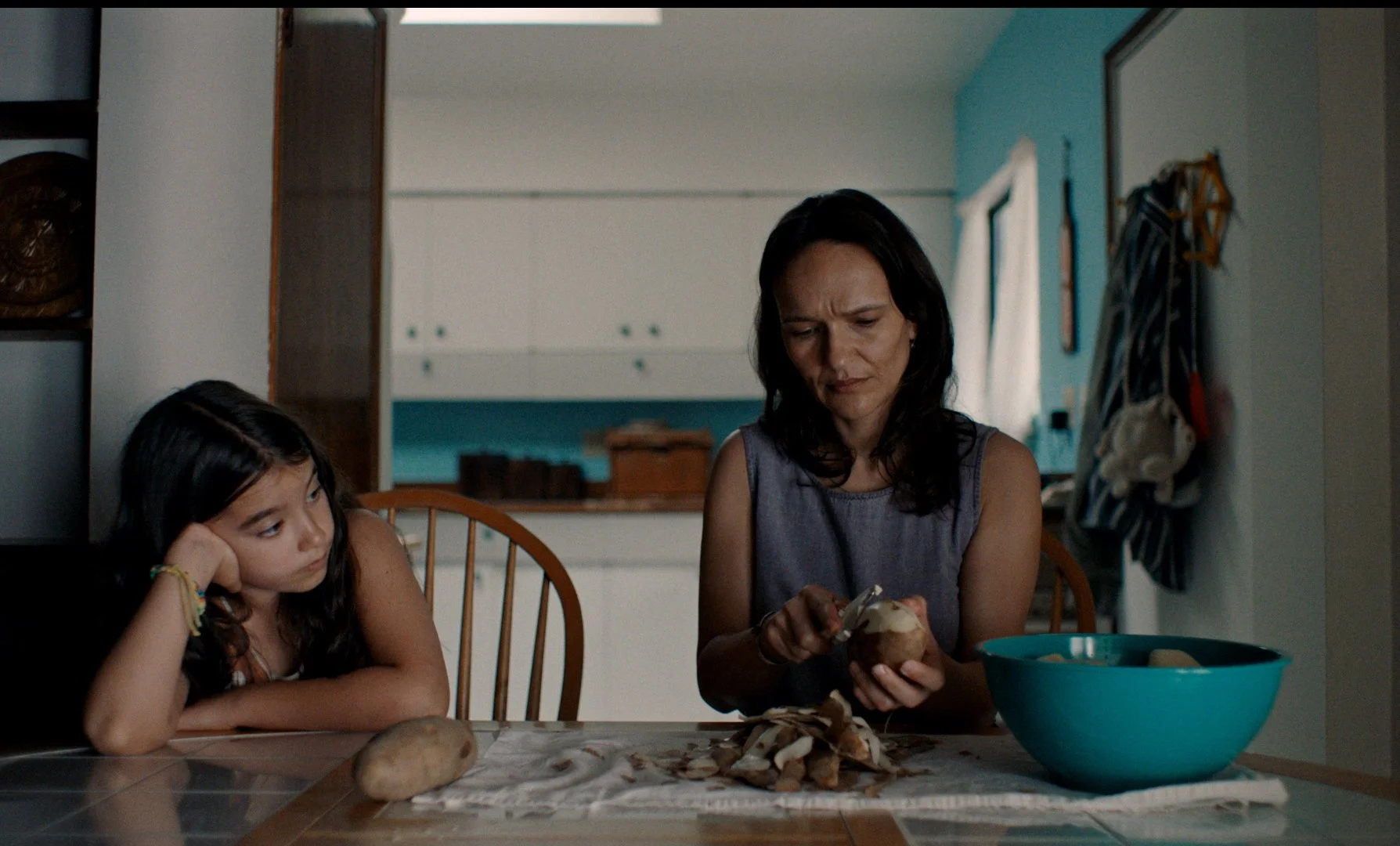
HS: You’ve mentioned [Robert] Altman, and that you and Amy [Zimmer] watched various films to help her get into her character. There’s also a direct reference to Jeanne Dielman, 23, quai du Commerce, 1080 Bruxelles [dir. Chantal Ackerman, 1975], at the beginning of the film. What were your main cinematic inspirations for Blue Heron, and what were you drawing from them specifically?
Yeah there's quite a few, but some of them are just one shot or some kind of synthesis ideas. But yeah, Short Cuts was the one that we probably referenced the most in terms of cinematography, and just sort of [John] Cassavetes' ethos in general, like with the camera being at a distance. There's a couple shots that were directly inspired by The Tree of Life [dir. Terrence Malick, 2011].
In the second half, I think we were pulling a little bit from like a Frederick Wiseman aesthetic for the social workers sequence - Domestic Violence (2001) was a film that I watched during prep. One of the films I sent Amy was Secrets and Lies [dir. Mike Leigh, 1996], just to show this character who's in a process of an investigation.
HS: In the spirit of film recommendations, if you were to screen Blue Heron in double bill, what film would you pair it with?
SR: Oh, you can’t throw that in there at the end!
HS: [laughs] Sorry!
SR: Um, [laughs] I don't know. Maybe something funny.
HS: Some comedic relief.
SR: Yeah, some comedic relief. Or maybe, like, a, a nice, like, Vincente Minnelli film. Something delightful. [laughs]
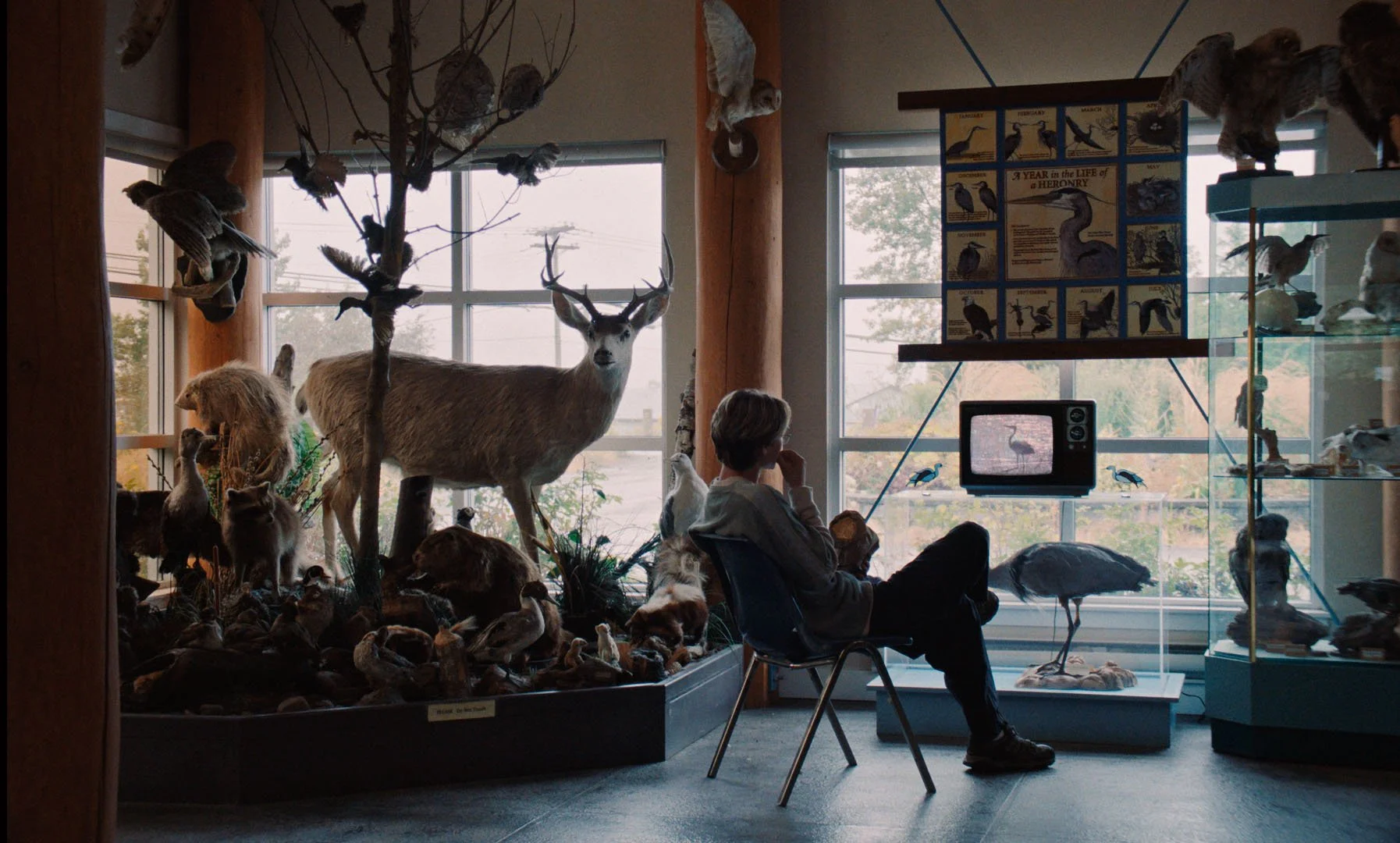
Blue Heron is in UK & Irish Cinemas now, via Conic.