
GROWING PAINS: THE STARS OF ‘EXTRA GEOGRAPHY’ TALK ABOUT THEIR SOON-TO-BE COMING-OF- CLASSIC
Images courtesy of Vertigo Releasing
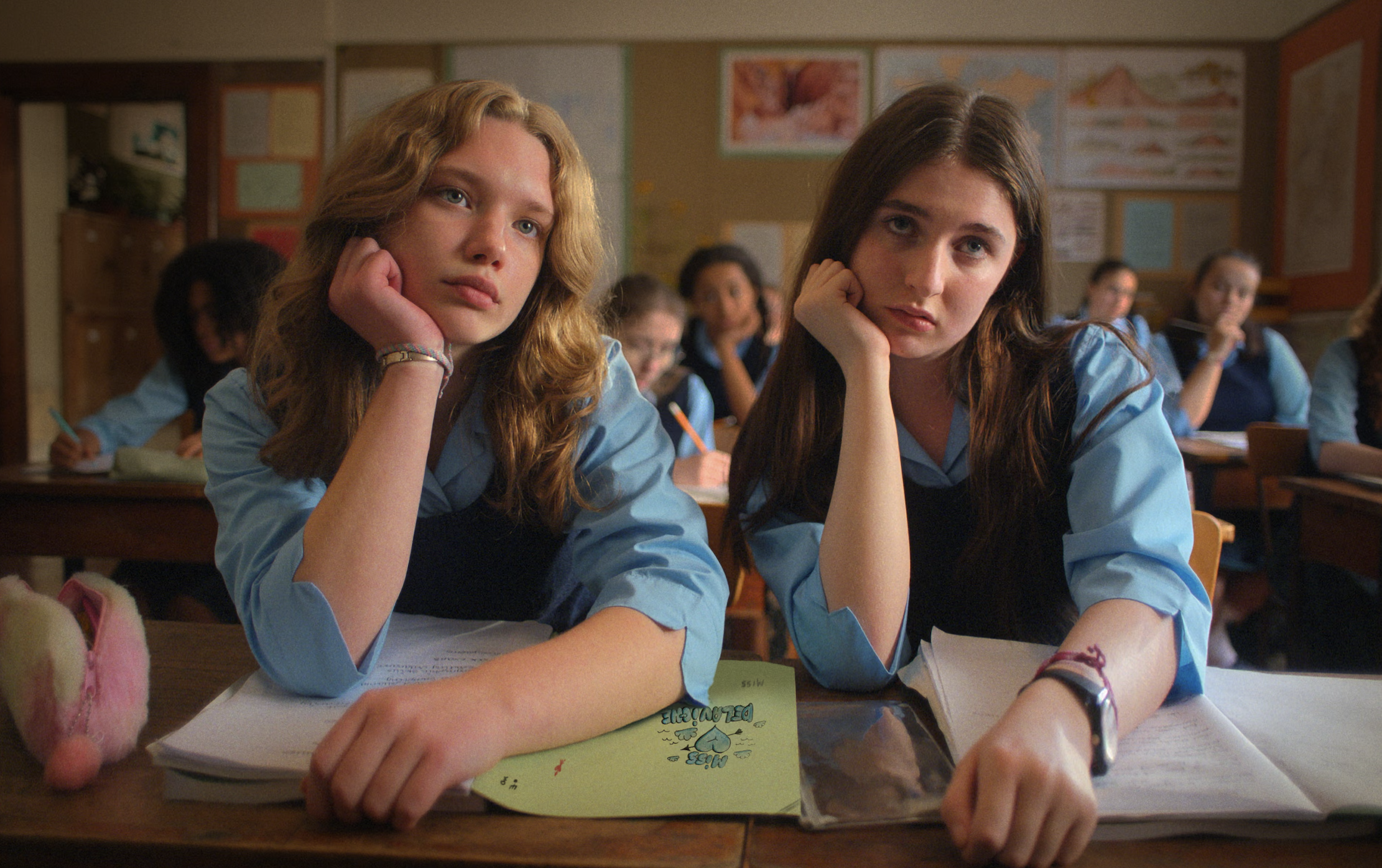
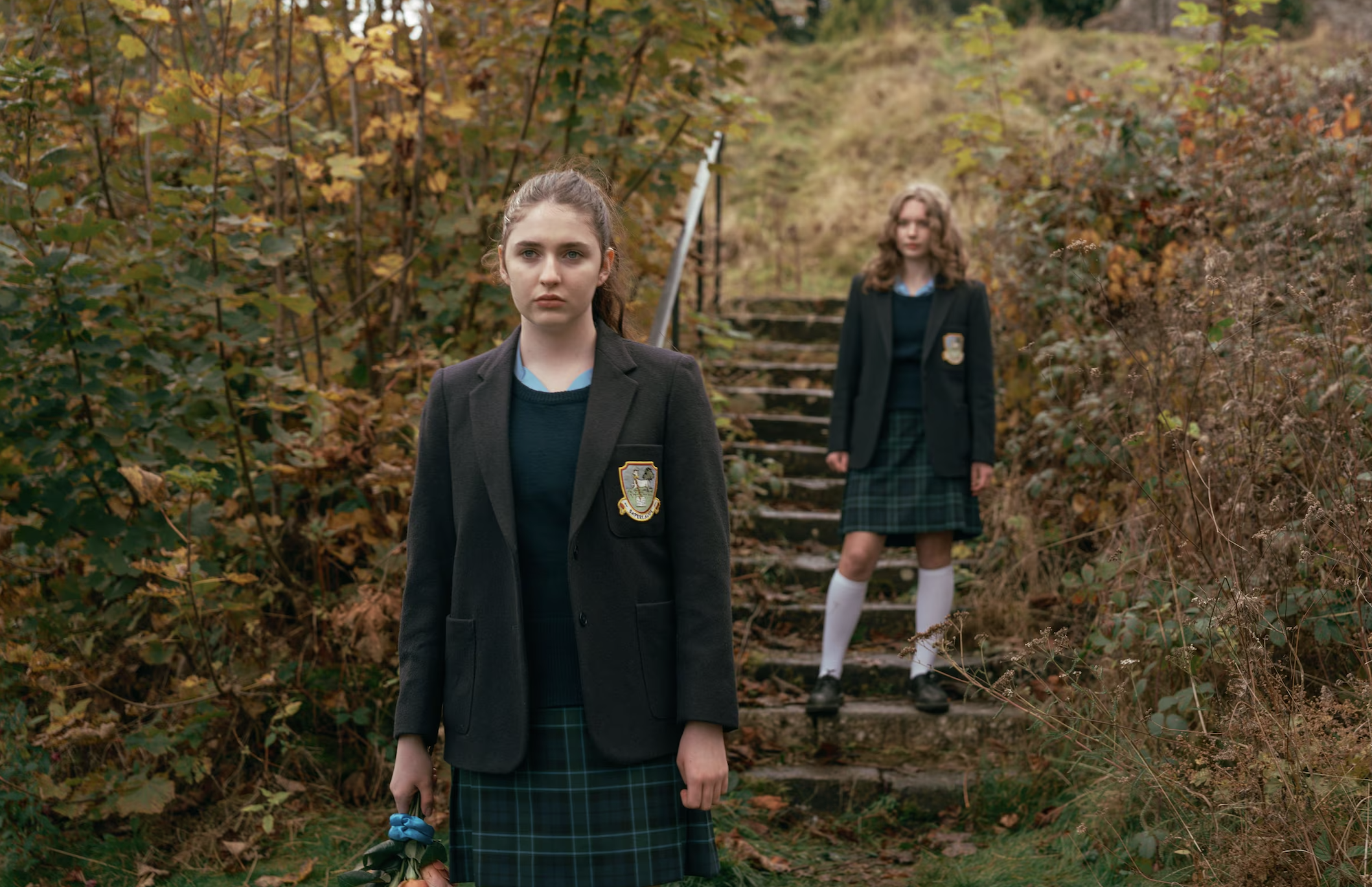
Equal parts deadpan and deeply moving, new coming-of-age comedy Extra Geography has been compared to other iconic cult classics in the genre like Ladybird and Rushmore, and rightly so. The debut feature from Molly Manners (One Day), with a razor-sharp screenplay from Miriam Battye (Succession), the film follows two overachieving best friends at an English boarding school, as they navigate friendship, boys, studies and everything in-between, all whilst grappling with the many challenges of girlhood.
An honest portrayal of the close yet competitive co-dependent friendships that shape every young woman, Extra Geography has resonated with audiences and critics alike (it currently holds a 100% score on Rotten Tomatoes) thanks to its offbeat sensibility, gorgeous visuals (the film was primarily shot in Gilling Castle in North Yorkshire), and striking performances from co-leads Galaxie Clear (Minna) and Marnie Duggan (Flic), both in their feature film debuts. On the last leg of their press tour (which started in Sundance back in January where the film premiered to rave reviews), Galaxie and Marnie sat down with MASSIVE to chat going back to school, coming-of-age faves and the importance of complicated women on screen.
MASSIVE: Extra Geography serves as both of your first film roles. What made you audition for the project, and how was it first stepping onto set?
Galaxie Clear: Extra Geography was my first project, but it was also my first audition. It came through an open casting call, so I had done acting lessons for about a year before and I wasn't quite sure that I would be able to make acting into a career, because it just felt so far out of my reach. But when I got this open casting, I kind of fell in love with the character, and I stepped onto this magical world, which was the film set, and had the time of my life.
Marni Duggan: I got sent the audition for it by my agent, and I was so drawn to it, because Miriam Battye’s writing is just incredible. And I thought, ‘If I don't get this role, I won't be able to watch it’. [laughs] It was one of them. So I did a tape, and then they asked to see me in Manchester and London, and then I eventually got told I got the part. And it was also my first project as well, and I'm so glad we got to experience this together. It was just-it was so surreal, but so amazing and beautiful.
How has it been touring the film at festivals like Sundance and Edinburgh film festival, and seeing audiences react to it for the first time?
GC: Seeing people watch Extra Geography and the response to it has been utterly incredible. Because when you wrap filming, I think there's a period of time where, you know, you're left to yourself and you don't hear too much about the process. But especially when it went to Sundance, which is such an indie person’s festival, it was really amazing to be amongst such amazing filmmakers. It was really nice to have something that we've worked on really closely, being put out in the world.
MD: Yeah, it was such a surreal experience. But I think, like Galaxie said, it's that type of target audience at Sundance, you know, the indie, creative people. And I think Extra Geography has a specific audience that would like the film - it's that coming-of-age, intense female friendship story - and so it was incredible. All the press and interviews have just been really fun, and to get to talk about this experience that we shared together has been amazing.
GC: There was also something that I was really excited to see, was that people were comparing it to the 2000s iconic ‘girl’ movies, like Wild Child, and St Trinian's, and that is exactly the kind of response that absolutely makes my day [laughs]. I'm so glad that people see that kind of indie classic, girlhood classic in the film, because that's what we grew up watching, films like that were so formative in my teenage years. So to think that it has that new life of being another generation of girls' formative film, that's so exciting.
Do you have a favourite coming of age film?
GC: Frances Ha by Greta Gerwig. I absolutely love that film. I think it really, really reminds me of Flic and Minna, because what I was really struck by in that film was the kind of ambiguity of the relationship, where it's this female friendship that feels almost romantic. But the way that it's created, it purposely doesn't lead in one direction or the other. So, it's so malleable to other people's experiences, and I really saw myself in that film, and I just think it's such a charming, charming film.
MD: I don't know if this counts as coming of age, but I love Mean Girls, It's a classic. Like Extra Geography, I think there's so many quotable lines, and I actually did see Extra Geography get compared to Mean Girls, which was an amazing feeling. It’s such a good exploration of being a girl and trying to find your place in almost a toxic environment at times, which I think is similar to this film. Flic and Minna are trying to find their feet, and you have other female characters in there who are also trying to find that, and we're all just trying to get through it together. And sometimes we’re mean about it, but it’s a form of survival as well.
The success of the film is contingent on the friendship between Flic and Minna being believable. How did you guys work to build chemistry before shooting, and on set?
GC: The chemistry, it kind of came immediately, because when we did the chemistry read, we had some questions kind of to open the conversation, and we found out we had quite a lot in common.
MD: She's a Pisces, I'm a Virgo, and I think they're like sister signs.
GC: Yeah! We had that astrology connection. We also both have a tuxedo cat [laughs]
MD: Tuxedo boy cats as well, yeah.
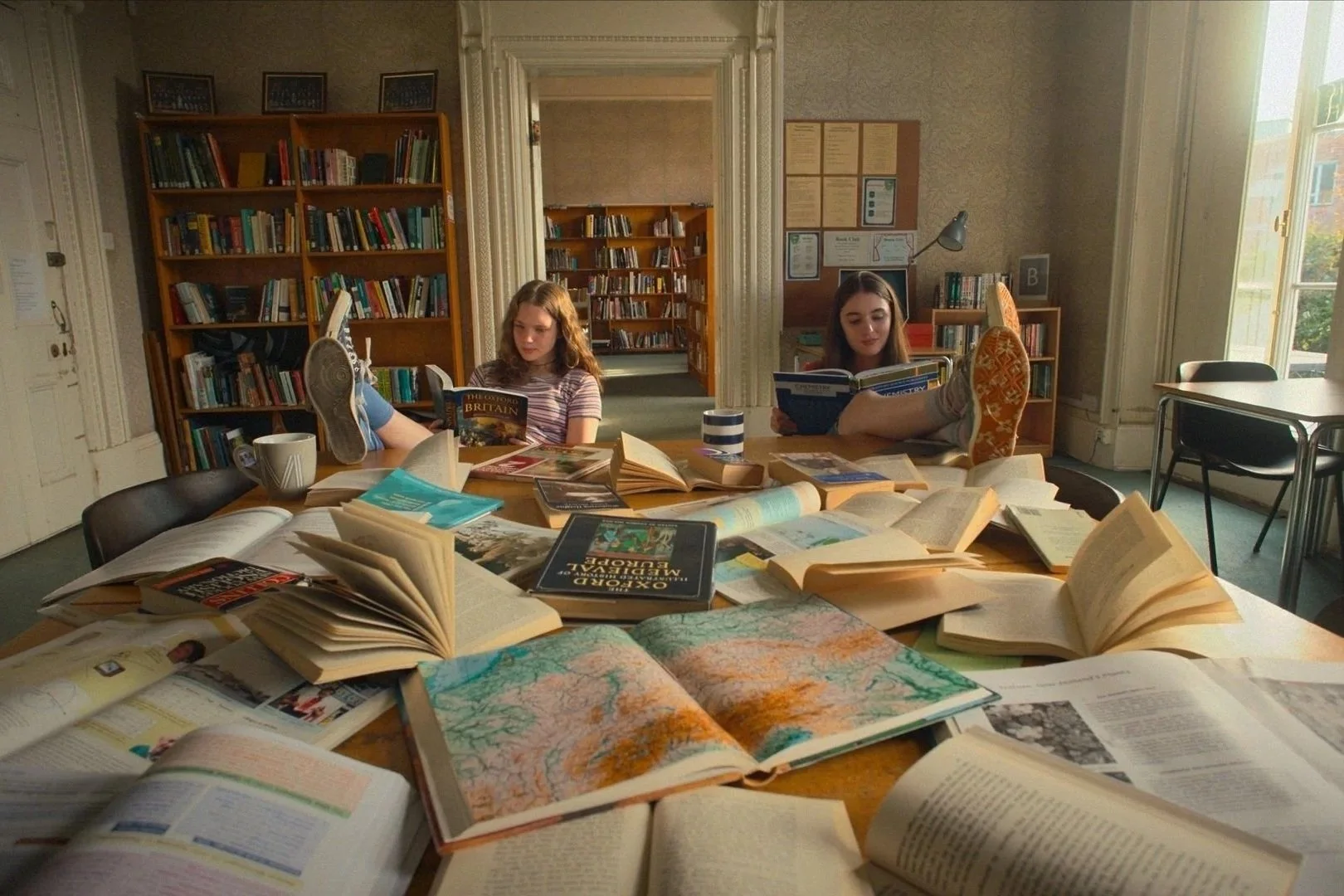
GC: And then on set, we just got on - it's like one of those things that you can't really explain, like why do we get on so well? But, you know it's like that openness of being able to bounce off of each other's energy, I think that really helped the dynamic. It's like you offer so much, and then I respond to that, and then you kind of build this friendship that in the film has been going on since year seven. And then we'd met a few months before, and then it's like we're best friends, so it's awesome. It's awesome.
MD: Yeah, I think we didn't have to try to build this chemistry. We just naturally had it. We just clicked straight away. I think the first time we met at the chemistry read, we did the Pulp Fiction dance together. And we were so physically in sync with each other, and the environment we were in kind of fostered that almost intense friendship, like Flic and Minna, but not as toxic probably. [laughs]. But we definitely just naturally had so much in common and just had this protective bond of each other. Even now, I'm so protective of Galaxie, and it just naturally built. It was very beautiful.
This film doesn’t shy away from presenting an intense and often complex dynamic between Flic & Minna which I think is very accurate to formative female friendships in your teens. Why do you think it’s important to have more nuanced representations of girlhood and female friendships on screen?
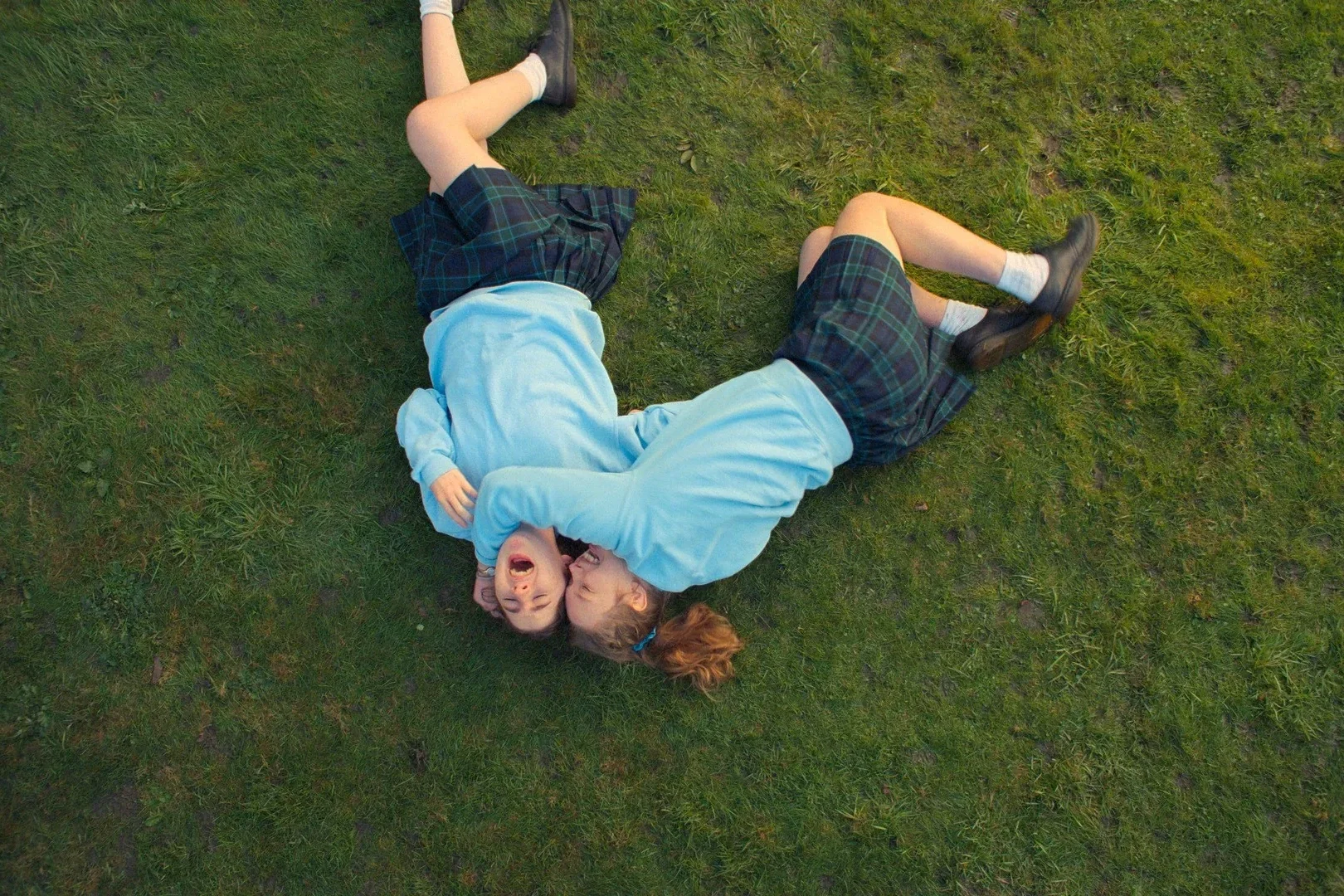
MD: I think because in general, women aren't allowed to be complex and be ambitious and passionate, sometimes to a fault. I think there's so many films where you see men being ruthless and going after what they want, and in the process of that, sometimes they might not do the right thing, and there's not enough representation of women doing that. I think it's good to have complex female characters that are trademarked. [laughs]. That's my favourite thing. So I think it's important to show the intense bond of female friendship, but also the personalities of these women. It's not always perfect, they're not always lovely people. Sometimes they can be aggressive. Sometimes they're angry, emotional, and that's ok.
GC: Yeah, and I think the reason that it seemed to connect with so many people is that it's this very honest exploration of teenage girlhood, and it was very clearly written, directed, and acted from very honest experiences. And as Marnie said, you show this complexity that allows these young women to be quite arrogant and sometimes mean, but they're very ambitious, and they're funny, and it's not in a judgmental way. It's in a very endearing, charming way that they're so arrogant and weird, but cool. [laughs] And it-- you can't describe them in one word, really. And that's what I am really enchanted by the film for, and that's why I think it has found the audience that it has, because it's so honest.
“If I were a young girl watching the film, I would so appreciate this depiction of messy female friendship, because it’s a canon event ”
The film is set in the early 2000s - how did it feel to have to go back in time to shoot it? Did it feel freeing to go analogue?
GC: Ooh. You know what? You really do notice the lack of phones. I can't imagine what the film would look like with an iPhone [laughs]. But I think because was born in the late 2000s, a lot of it feels- I mean, it's not direct to my experience, but it feels vaguely nostalgic.
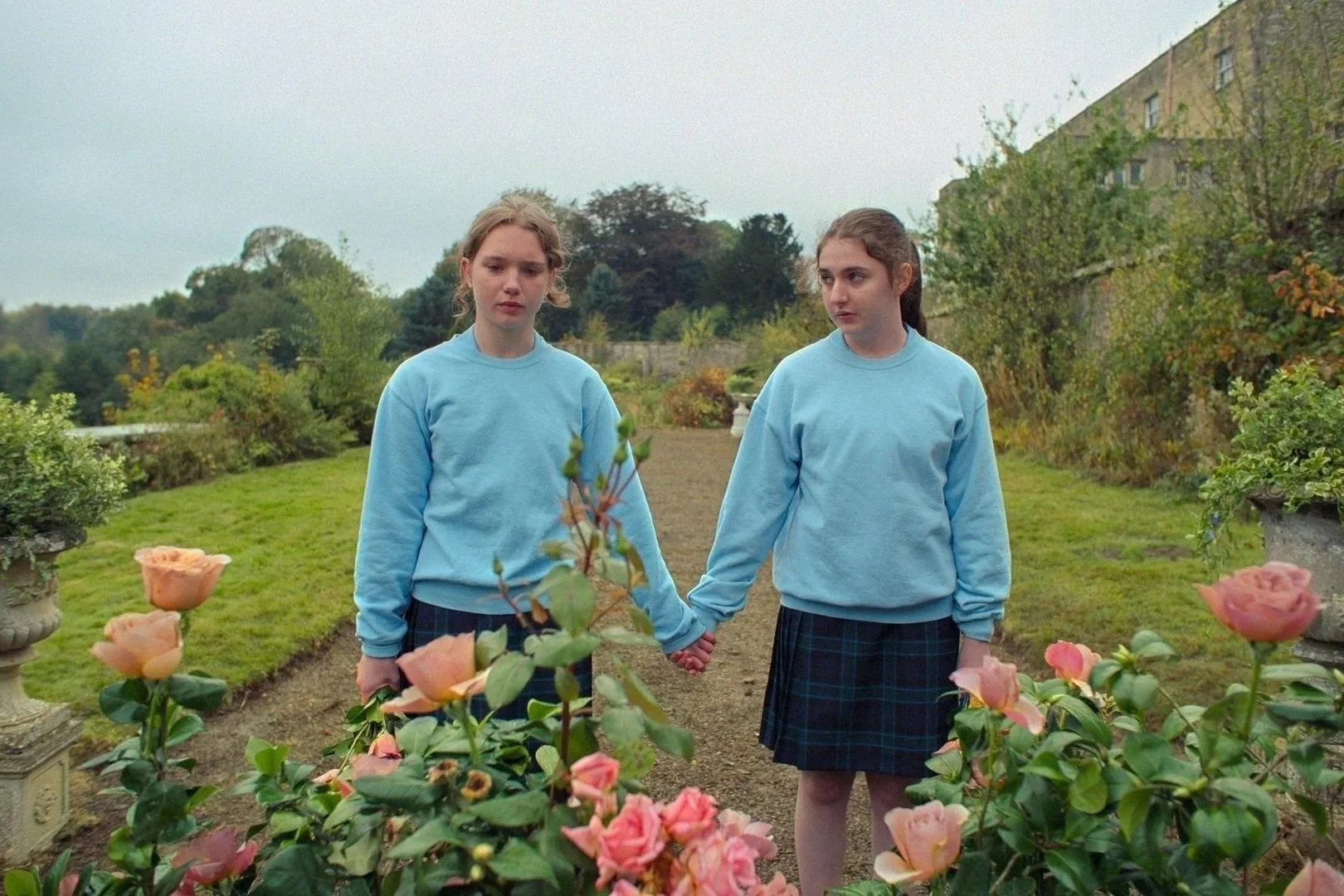
Also the clothes - I love the clothes. The uniforms were so fun. We all had our watches as well. That's something I found really interesting- each character has their own watch and it kind of reflects their personality.
MD: Yeah, we all had watches. We had friendship bracelets as well that were different colors. We were both born in the late 2000s, so I guess I didn't really get to experience it, but it's a weird feeling where you feel nostalgic for a time that you actually never really experienced. I love all the 2000s fashion and films, so I think I would have loved to have been there, to have been old enough to understand what was going on. But it did feel weirdly nostalgic, even though I wasn't that age when it was peak 2000s.
How was it filming in just one location, did it feel like going back to school?
GC: I think the one location had a really big impact on the way that the film came out. I think it does harken back to that school environment where you are in this singular space. And I think what I found really interesting, and something that I worked with Molly [Manners] on, is that you're going from one scene to another, not in chronological order, but you're in the same space. So you really have to consider where your character is at. Especially as my first filming experience, that was something that I really, like, got my teeth into and got used to.
MD: I think definitely the cold and the uniform and the school shoes and everything, it definitely makes you feel like you're in school. I always think when I'm trying to get into a character, the shoes are one of the most important ways to get in, literally into the shoes of the character. Flic had these really heavy school shoes, which kind of helped influence the way I walked and how I presented myself as Flic. I think that's so important with getting into a character. So yeah, it definitely had a school feel. You felt like you were back at school, definitely. [laughs]
Do you have a favourite memory from set?
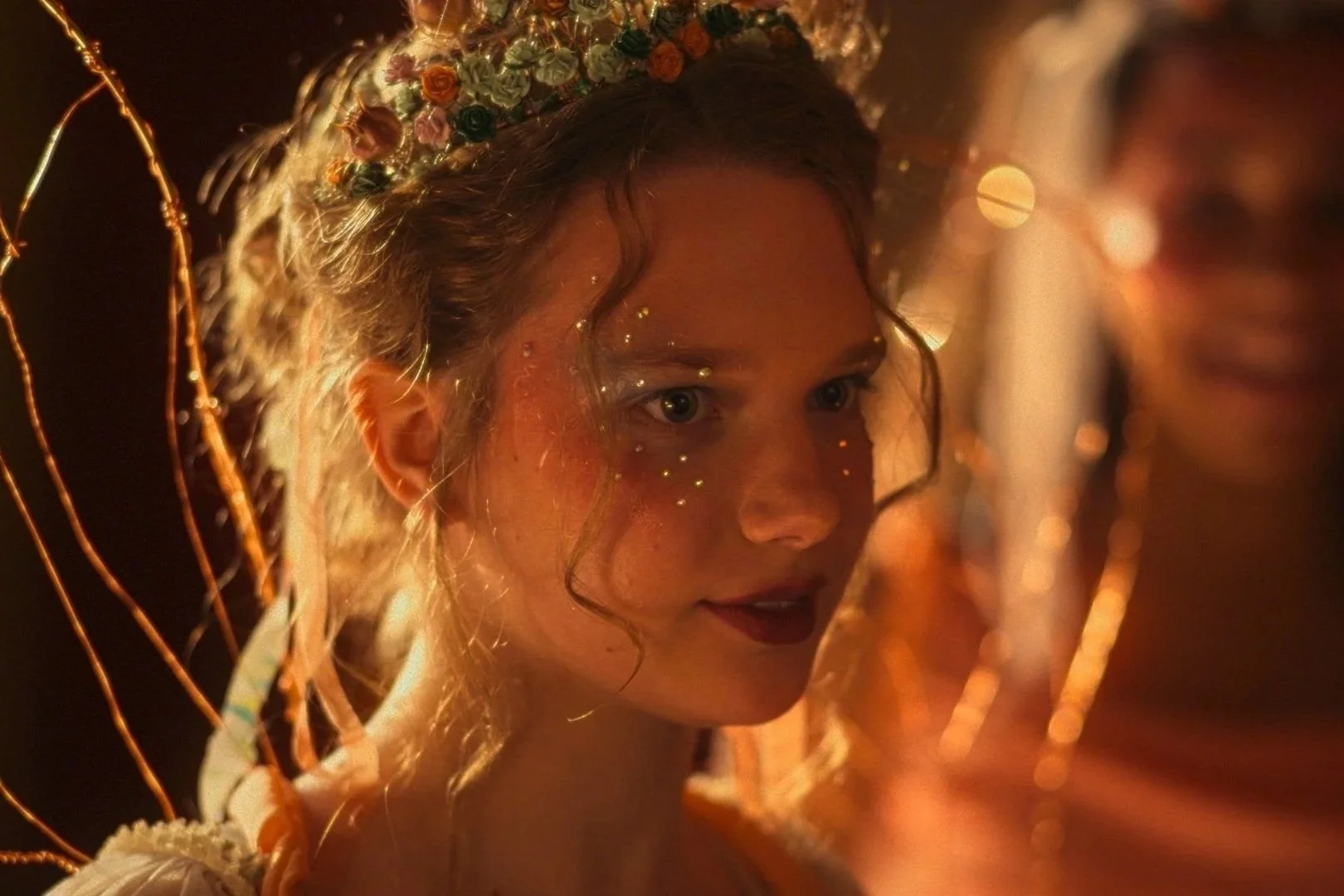
GC: My favourite day on set didn't actually happen at the school, it was one of the on-location days, it was the theatre. The theatre is so beautiful, and all the costumes and the lighting were so incredible. We’re performing A Midsummer Night’s Dream, and I had this beautiful fairy costume as Titania, and I loved that. I just loved being in those costumes and seeing everyone dressed up. We had a lot of fun there.
MD: Yeah, I think the theatre day was one of the highlights. We filmed at Castle Howard at one point as well which was amazing. I'm a massive Arctic Monkeys fan, and they filmed a music video there, which was surreal. I was like, "I'm standing where Alex Turner stood. That's crazy!”, so that was fun.
You’re both so early in your careers - what's next for you guys? Both in terms of what you have coming up, but also in terms of what sort of projects and which directors interest you - what would you love to do next?
GC: I've got The Secret Diary of Adrian Mole coming out soon. I can't say much, but I will say it's a very, very fun and exciting series. I found that looking forward, I can never predict what my next favorite role is gonna be. I would love to just work with as many people as possible and get a real feel for the industry. Obviously I have my dream directors like Sofia Coppola and Wes Anderson - I love those very visually intense films. So any film that has a very strong art direction, that's so up my street.
MD: I don't have anything coming up at the moment, but I'd like to really push myself with whatever role I take on next. I've had experiences in theatre, so I'd like to do more theater, musical theater, I’m a massive theatre nerd. Roles can push you to uncomfortable places, so I'd like to really challenge myself. I'd do anything, honestly. Anything that I like- messy, misunderstood, complex characters, that's what I'm drawn to, and that's what I'd like to keep doing. In terms of dream directors, I’d love to work with Sean Baker. I think he has such a knack for depicting realistic, messy situations in a very real, human, unfiltered way. I'd love to do stuff like that.
Extra Geography is in cinemas now.