
A NEW CULT CLASSIC: JANE SCHOENBRUN ON ‘TEENAGE SEX AND DEATH AT CAMP MIASMA’
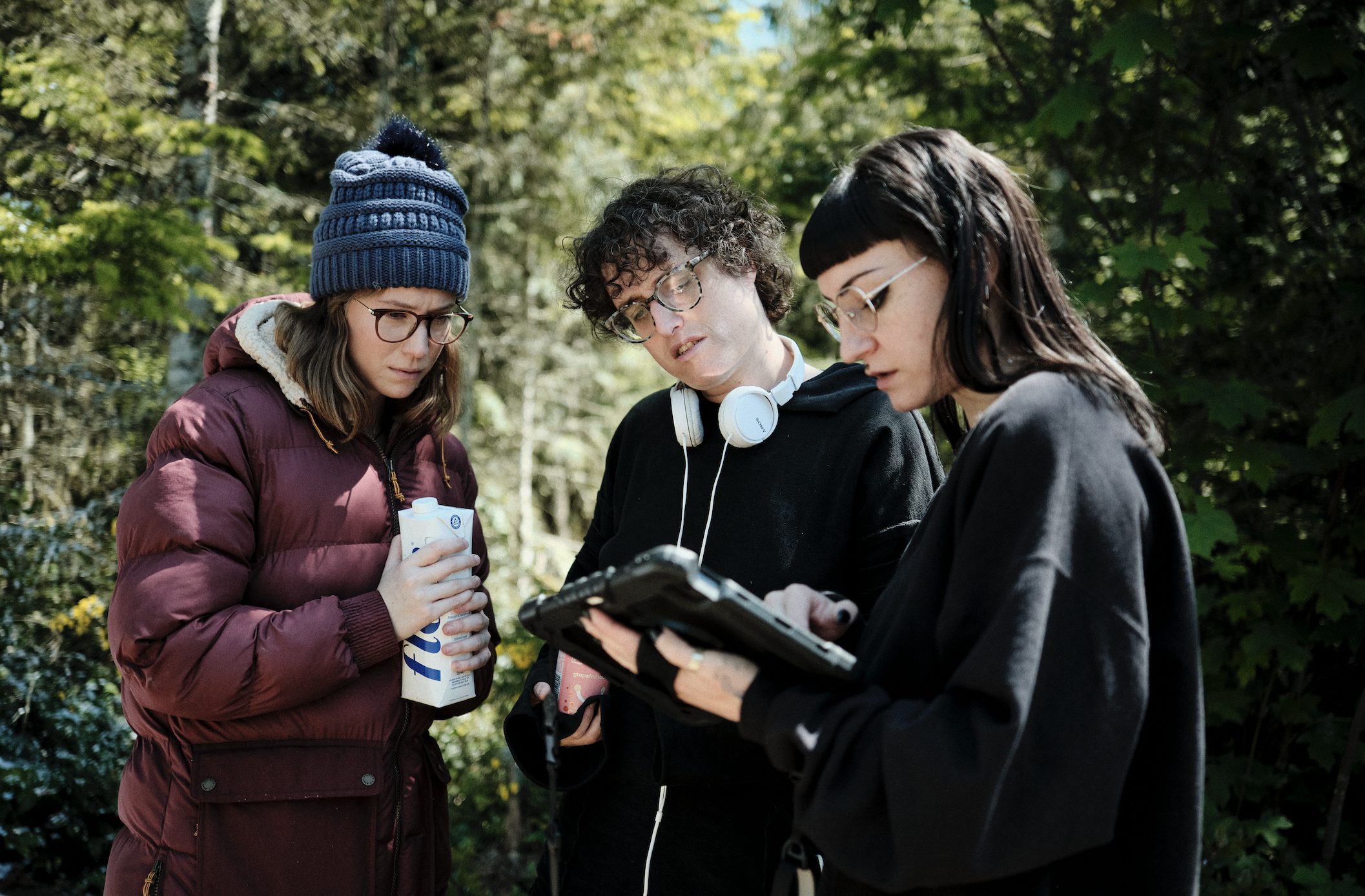
Since its premiere at Cannes back in May, the hype for Teenage Sex and Death at Camp Miasma, the third film from I Saw the TV Glow director Jane Schoenbrun, has been palpable.
When filmmaker Kris (Hannah Einbinder) is offered the chance to reboot ‘Camp Miasma’, a fictional slasher franchise inspired by the hyper-sexualised—and often transphobic—horror films of Schoenbrun’s youth, she decides to track down the original film’s ‘final girl’ Billy (Gillian Anderson) as part of her research. Arriving at the very summer camp where the films were shot (and where Billy still lives), an instant connection occurs between the two women that proves more formative for Kris than she could have ever imagined.
Both honouring and interrogating the slashers that raised them, Schoenbrun’s third feature once again showcases the director’s singular vision, creating an alt horror remake that also serves as a profound exploration of sex, desire and bodily reconnection.
On the eve of the film’s US release, MASSIVE sat down with director Jane Schoenbrun to talk about constructing the film’s iconic opening sequence, hidden easter eggs and the power of ‘freaky’ energy between the film’s leads Hannah Einbinder and Gillian Anderson.
HS: The film had its premiere at Cannes back in May, where it won the Queer Palm, and since then you, Gillian [Anderson] and Hannah [Einbinder] have been touring the film both across the US and internationally. How has it been experiencing this journey that the film has been on, and seeing audiences react to it?
JS: It’s really fun because it's a comedy. I think it's, like, in many ways not just a crowd-pleaser, but certainly compared to my other films, it's a lot more inviting and goofy and really made to have a good time with. And that people are doing that is lovely, right? If everyone was like, "This movie is not good," it would feel worse. [laughs]
But no, it's been really warmly received, and I think I've been lucky with all of my films to have people really respond to them. But I've also learned to not put too much weight in that. I almost, like, secretly hope that the next one is more divisive, [laughs] because I think it's really easy to, especially when you're just being praised externally, to try and make the goal that. For me at least, that is very much not, not the goal, or that is something that I try to stay suspicious of. Because I think if you don't, you can go down some roads that you shouldn't.
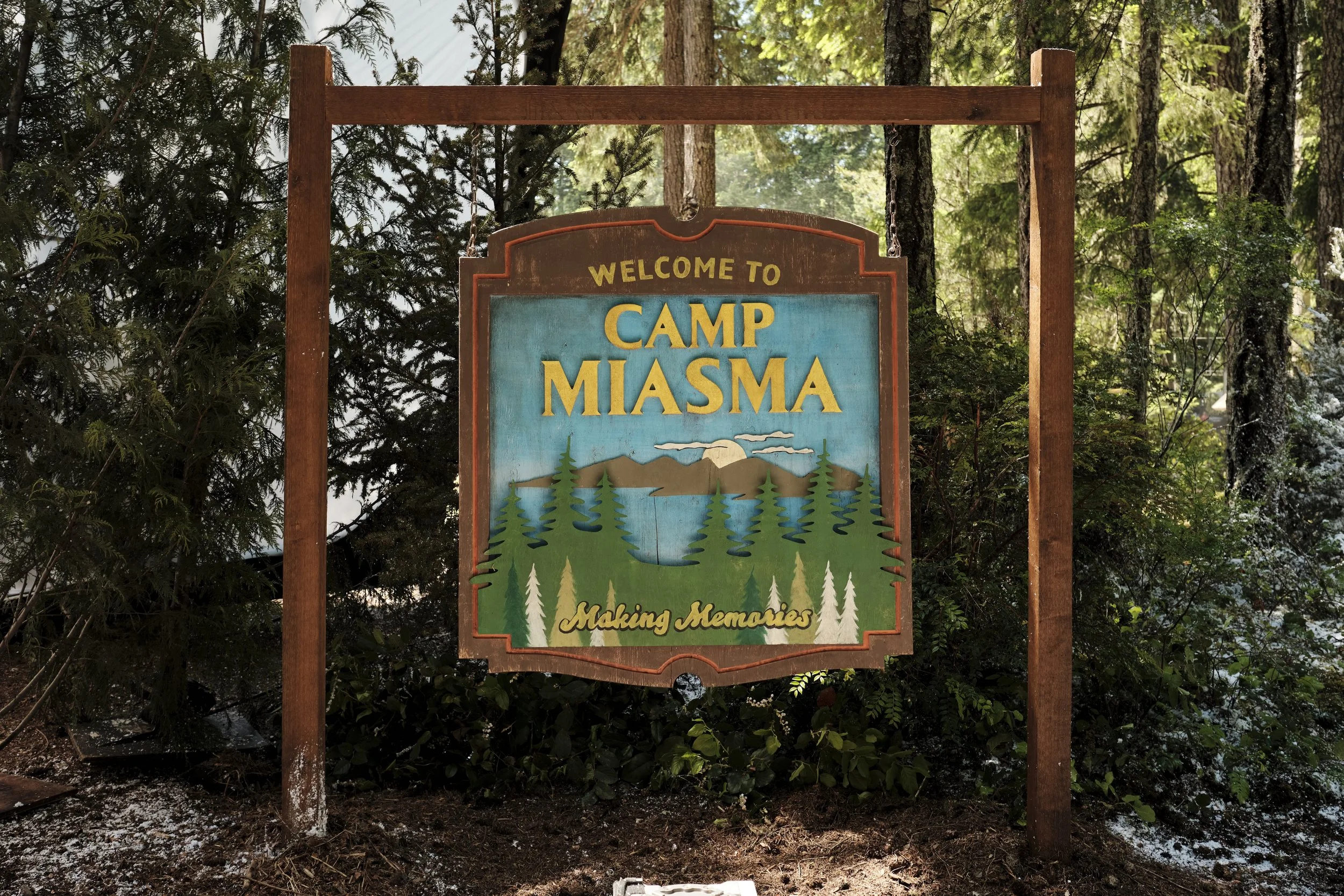
HS: I was immediately hooked by the opening sequence of the film - I love how it’s almost like a short film in itself, tracing the genealogy of the invented Camp Miasma franchise and setting up the story we're about to see. You've not done anything like this before in your previous films, so I’d love to know more about its conception - how did you write it into the script, and how did you work with your production designs to achieve that intense level of detail that we see?
JS: I remember when I did kind of realise that, yes, it could be like its own discrete short film within the film. And I actually do that a number of times within the film - there are different sections of the film that in many ways do stand alone, but then form this larger picture. That's a narrative structure that appeals to me, rather than everything being sort of tension spilling into the next thing. You know, like creating this, like, mixtape almost of compounding little things that then form a bigger picture. Like, that's a narrative structure that feels like a little more my vibe than like a traditional 3-act whatever.
I think that I'm very proud of it, both conceptually and in terms of, like, what the team pulled off there. The storytelling of that scene is the storytelling of capitalism, it's the storytelling of this thing that we're all aware of, but that the movies don't quite acknowledge. Like when you see Mike Myers again - which I guarantee you will - he's just been rebooted and remade and sequelled so many times that, like, isn't that guy tired already? [Laughs]. And so getting that across, that the franchise is way past its prime, was just really fun storytelling. There's also obviously so much love and affection in it because I grew up watching, you know, terrible horror movie sequels on videotape and then waited with bated breath as they made the 1st terrible reboot and the 2nd and the 3rd, and so I know that world.
Making it with my team, it required such a level of detail that I essentially did a pop-up writer's room. Like, I just got my 4 or 5 closest collaborators, my cinematographer, my production designer, and then just some other folks who've worked on all my movies who really know my voice, together. And we just spent an entire day with the door locked shot listing and planning out exactly what we would see, and just, like all the taglines and weird jokes and the attention to detail that it deserved. It was so fun. It wasn't like homework, it was like, dreaming, you know? Because just creating that kind of ephemera and really figuring out not just that, like, there would be a little death costume at Party City, but that they wouldn't be able to license the IP, so they'd call him air vent man. And that's just us, like, laughing in a room, you know?
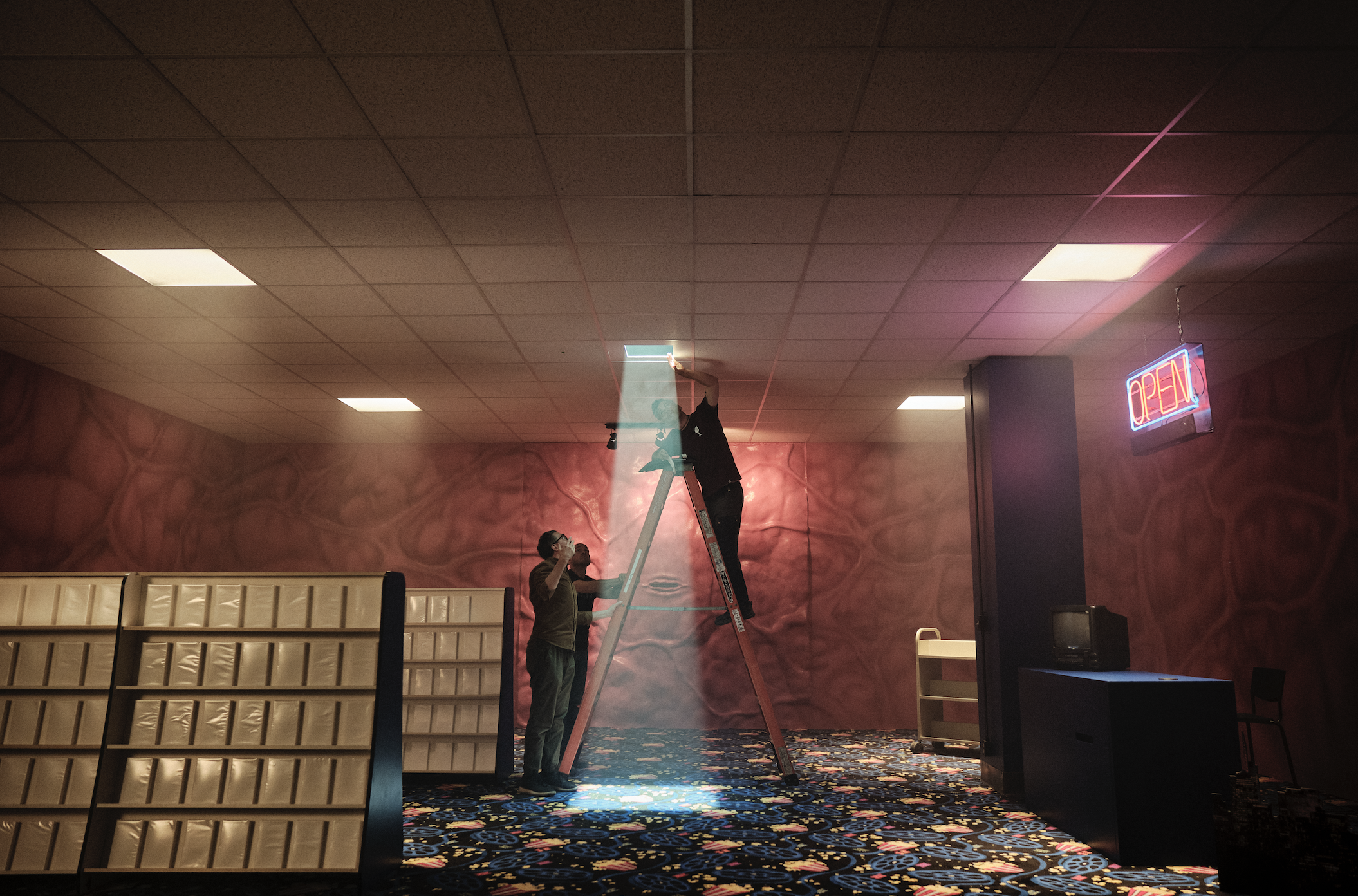
I love that sequence and I love the work that everyone did, but especially the work that Brandon, my production designer, and Matt, my other production designer did, like, literally building a museum. We shot it on the last day of production and they were just toiling in the background the whole time, because aside from production designing the rest of the movie, they were basically doing this bonus movie on the side. [Laughs]
HS: That attention to detail is so prevalent not just in the opening sequence but in the entirety of the film, and as I’ve rewatched it, there’s been more details and subtle references that I’ve unlocked. One of my favourites that I noticed on a rewatch was when Kris gets to the hotel at the beginning of the film, and it’s an independent hotel that’s being turned into a Marriott, with the banner on the entrance. And I was like, "Oh, the hotel's being rebooted!", like nothing is free from capitalism. So, I would love to know if you had a favourite detail in the film, or one you think viewers might miss.
JS: I'm glad you picked that one up 'cause no one's really asked about it yet, and yeah it is me being like, ‘Capitalism!’ [laughs]. I'll give you another detail in that scene. Originally, the sheriff character in the movies and the hotel clerk in quote unquote, "real life", weren’t played by the same actor. I had written the hotel clerk specifically to be played by an actor named Mark Patton who starred in Nightmare on Elm Street 2: Freddy's Revenge. He was a closeted gay man at the time, kind of like one of the few final boys of the slasher franchise, and the movie essentially ruined his career.
There's also a wonderful documentary about him, called Scream Queen, and it’s about him confronting the screenwriter of the film, who had written the film as kind of a parable of the dangers of being gay. Mark has since become this sort of queer icon, he has reclaimed that role. But it was a footnote for me about - not just the way that queerness intersects within the narratives of these movies, but also the real world impact of the way that queerness was treated culturally through these movies behind the camera, in the Reagan, AIDS era. So I really wanted Mark to be in there and he wanted to do it and we spoke about it a few times. Ultimately, he had some health problems and wasn't able to be there. So instead the hotel is called the Patton Inn, and you can see his picture on the wall when Kevin [McDonald, who plays the hotel clerk] is digging for the DVD player. So that's one rather oblique, easy to miss kind of footnote that exists in the film that, that hopefully deepens it in some way.
HS: I also wanted to talk to you about the now iconic line in the film, "There's a hole at the bottom of the lake where the movies come from." It was one of the few lines used in the first ever teaser for the film that came out back in February, and you’ve cited previously how that line came to you before you really understood what it meant. I wondered if you could speak to the writing of that line - has your relationship to it changed now the film is out?
JS: I'm glad people like it. I was always a little worried that it crossed a line into being too poetic or like too metaphoric in a way where the movie never quite explains it in the mythology. I think it does explain it in the mythology, but in a way that's very heady and almost like the mythology that we get for it is subservient to the poetry of the idea.
My oldest friend who I rented every single Nightmare on Elm Street movie and watched with in 5th grade was at the screening we just did in New York, and he came up to me afterwards and he was like, "It's true. There is a hole at the bottom of the lake where the movies come from!". So yeah there is something totemic about it and I'm proud of it as just sort of a succinct, lyrical way to get at some of the ideas that I am obsessed with and that the movie is exploring.
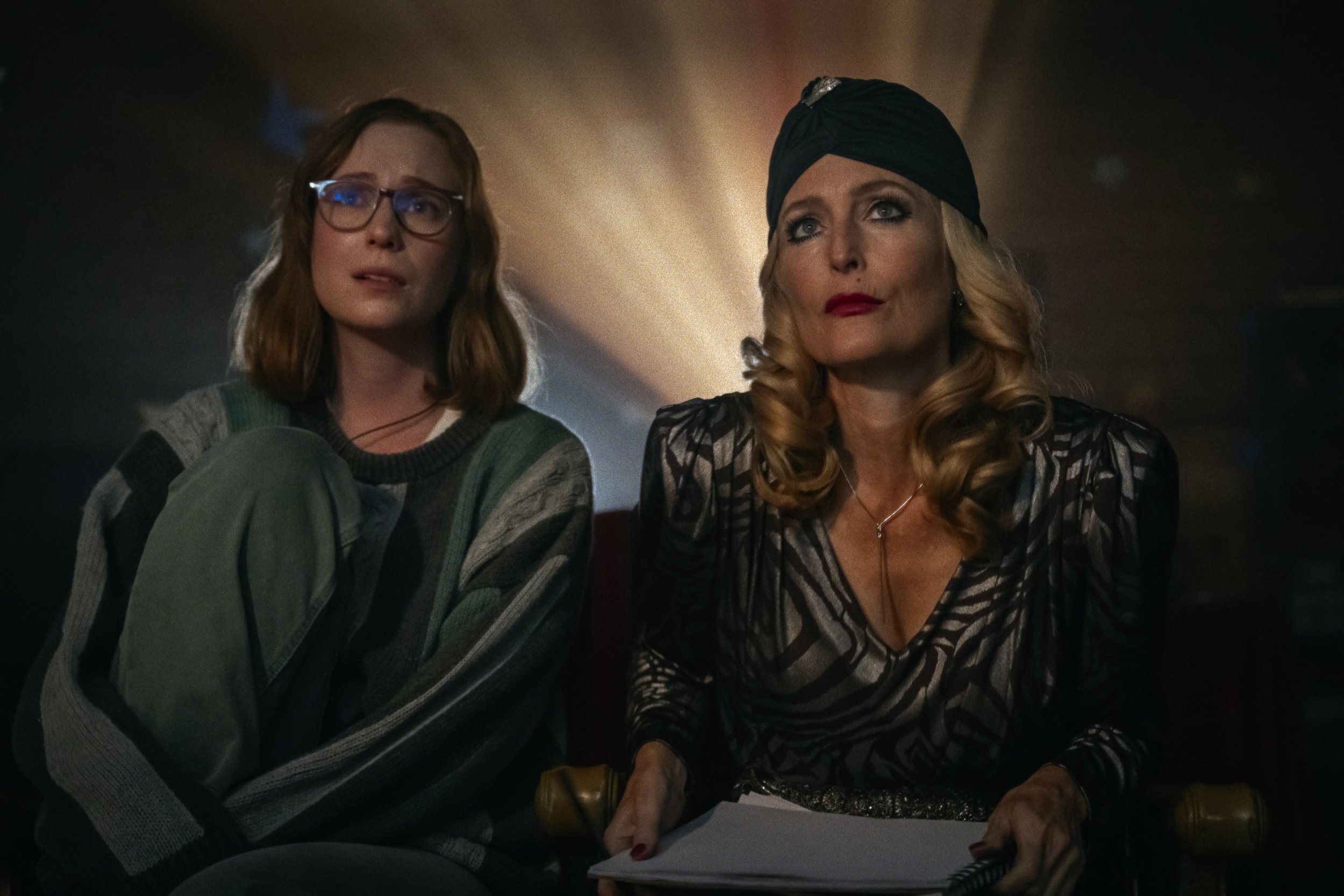
HS: Moving onto the casting of Gillian Anderson and Hannah Einbinder, you’re having to cast two leads who are playing such different characters, but the success of the film is conti gent on their chemistry - both romantic and comedic. I was particularly interested in your casting of Gillian because your work is so referential to media that came before it, and I remember when I Saw the TV Glow came out and you did an interview talking about your decision to cast Buffy The Vampire Slayer’s Amber Benson. Obviously Gillian was the lead of an equally iconic TV series of that era, so I was interested in whether that a conscious decision when it came to casting?
JS: There was something conscious for sure going on. And I think - I didn't see them together until we got there [to rehearsals], so it’s just kind of like in your brain, you know? I literally remember looking at images of them side by side on my computer, and so you're really just imagining what it could feel like. It’s funny because Gillian, like, a week or two ago, made a post on social media with with pictures of herself from the 90s against pictures of Hannah from now, comparing how similar they look, but even more how similar their energy is. And that was something that I was aware of. I was like, “oh there's something freaky in that”, in the inter-generational doppelgängery about these two. [Laughs] And I remember being like mischievously amused imagining making this erotic, sensuous, psycho-romance between the two of them, with that being true. Like I remember really early on, realising that, like, yeah, the way that their persona energy matches in this like doppelgängery way, this is gonna add this freaky layer on top of everything else in terms of how that chemistry feels. I think I was very right about that.
But what I couldn't have anticipated was Gillian's Southern accent. There was always this idea in the film of Hannah starting the movie as kind of the, like, straight man, you know? Or the audience surrogate, and Gillian being this larger-than-life, totemic, Norma Desmond kind of figure. And then them kind of matching each other’s freak, or bringing each other to their level. And that was always there, but the richness and specificity of all of that only came through them. I remember the first time we were all together and we were reading lines was maybe, like, 3 days before production. And it was the first time that I knew the movie would rock, you know? The movie is an empty house and these two humans and the way that the space between them and the energy between them exists is what you fill the house with above all else. And it was just there in this way that was both exactly what I had imagined and completely unexpected and weirder than I imagined in a way.
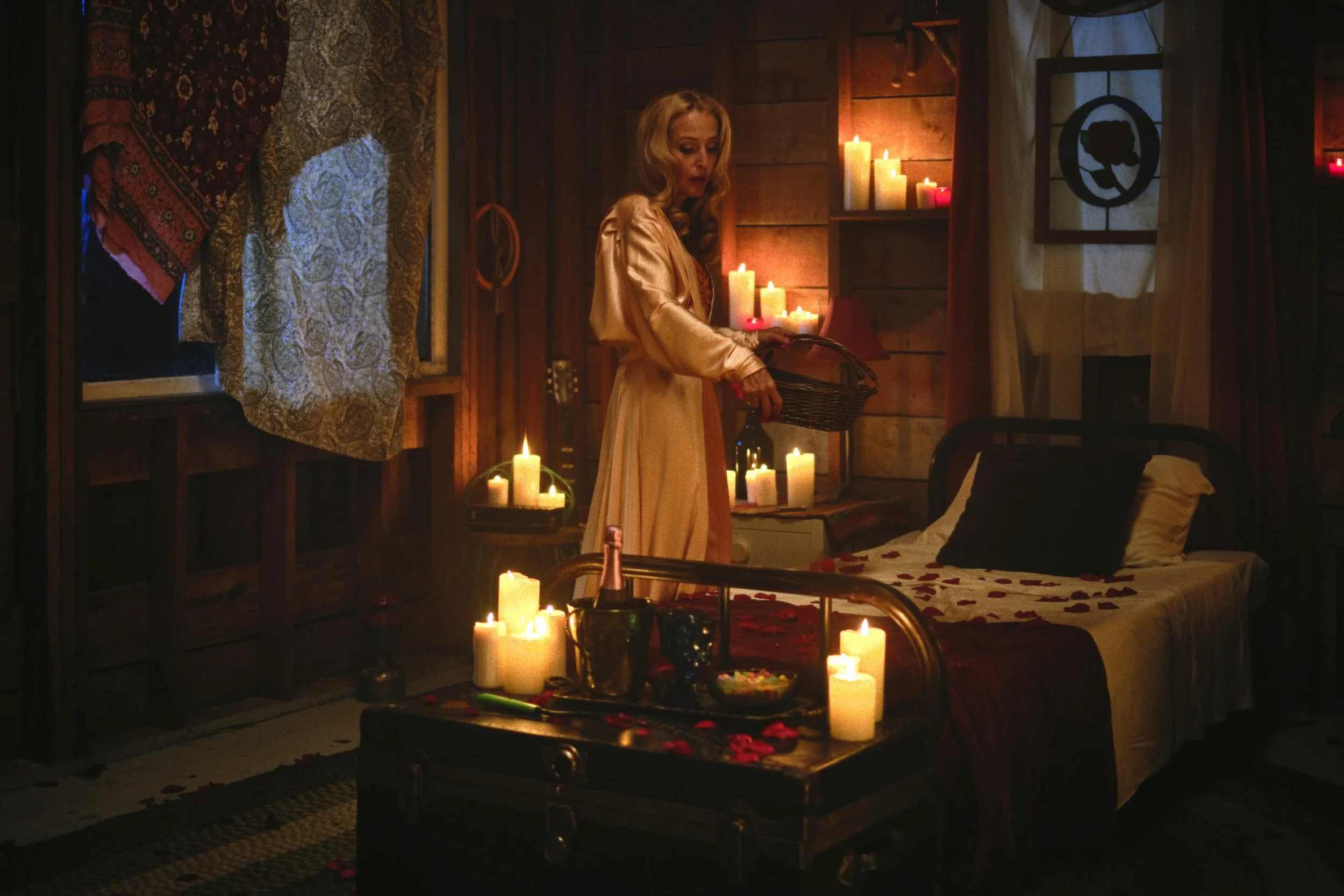
HS: I found Teenage Sex and Death at Camp Miasma very refreshing in its portrayal of desire, and queer desire. I think it's taken a while for us to get there, but more and more films are portraying sex and potentially taboo sexual fantasies more openly. How do you conceive of kind of the film’s relationship in this, and what kind of conversations about our relationship to sex as a culture do you hope it opens up?
JS: I think that there's always going to be something pretty sensitive in my work, you know? I don't think it's - I'm not trying to be cool or edgy, necessarily. I'm trying to be really honest and vulnerable, and gentle in a way. But to not use those parts of myself just to be a tender little dove, but to actually push through with gentleness and tenderness and vulnerability to really difficult to look at things. Like, that is what I've spent the last 10 years doing in my own life, and it's worked out well for me. [laughs] I've gotten a lot healthier through trying to openly and tenderly explore taboo and scary and repressed parts of my own self and sexuality, and so I want the film to be inviting people to do the same, obviously. And the film is sort of designed to surface things that when they happen on screen, not everyone is gonna relate to it. But for those who do, the hope is that they feel a little less alone in it, you know?
I love to make films that capture something that certain people can relate to but that maybe they didn't even know, or didn’t have the language for. Because then if the film can create the language that lets people investigate themselves, it can hopefully help in some way or lead people to do the scary work of understanding themselves and, and the world. But that can never be reverse engineered. That is something that can only really come from being honest, vulnerable and truthful, like unrelentingly truthful. But yeah, standing up and saying out loud the thing that everyone else is too ashamed to even think, let alone say out loud - I think I have a talent for this, or at least a proclivity [laughs] for it.
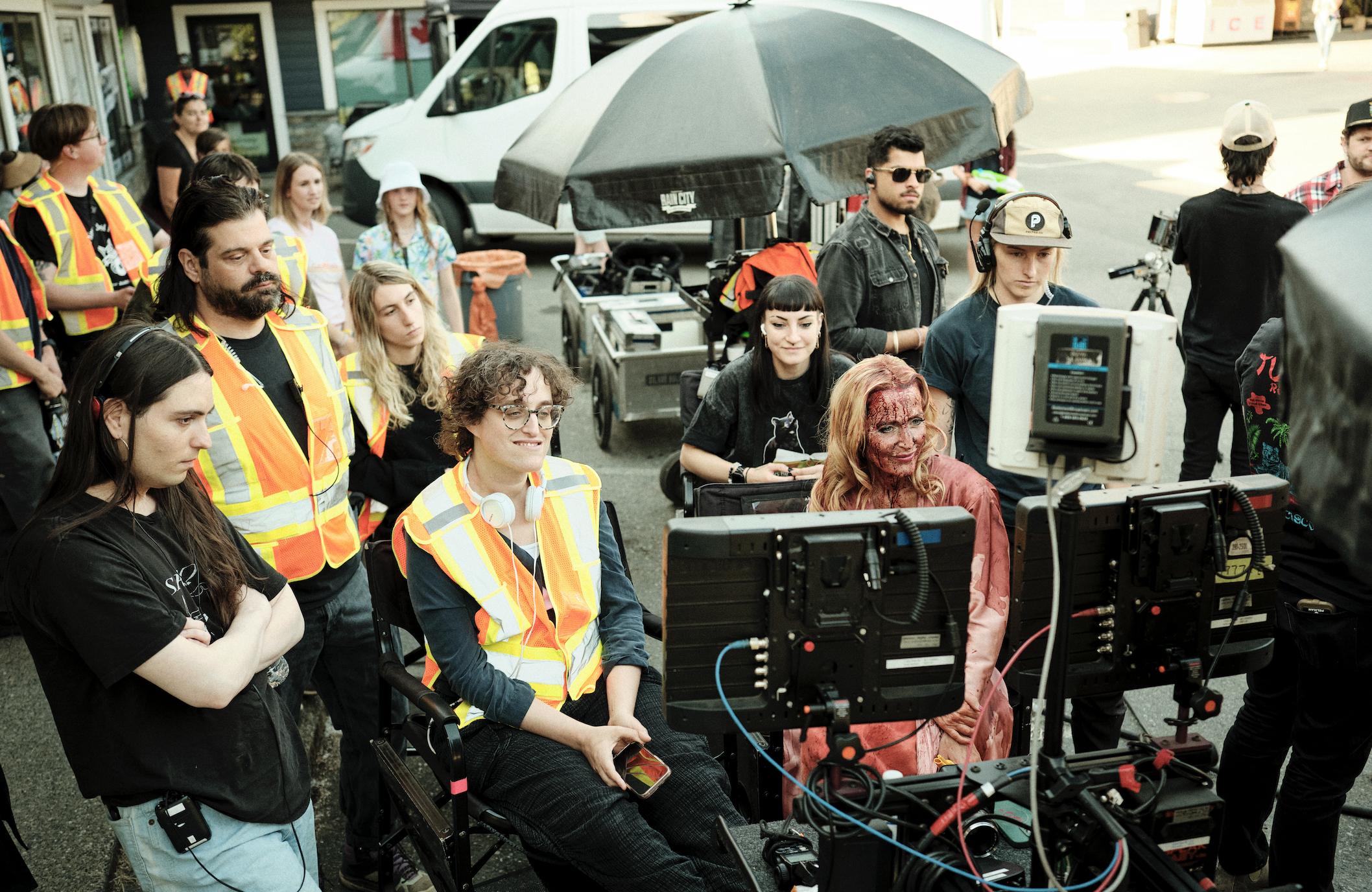
Teenage Sex and Death at Camp Miasma is in UK & Irish Cinemas now - find your nearest screening here. Images courtesy of MUBI.